A Practical Guide to the Perfect 1 on 1 Agenda
A good 1 on 1 agenda is more than a list of topics. It is a shared playbook for the meeting between a manager and a direct report. This document turns a chat into a focused, productive conversation. It makes sure you both show up ready to talk about important topics and leave with a clear plan. The best agendas are collaborative. Both people add to them before the meeting.
Why Your 1 on 1s Need a Real Agenda
One on one meetings have increased. They were a rare check-in. Now they are a constant part of our calendars. This increase in meetings means we need a better system to keep them productive. Without a clear plan, they are the first meeting to get canceled. They become a boring status update. They miss important subjects. A proper 1 on 1 agenda is the solution.
The numbers show a clear trend. Before 2020, the average person had about 0.9 one on one meetings a week. Today, that number has increased by over 500% to 5.6 meetings every week. That total is 278 of these meetings a year. This is a large jump from 45 pre-pandemic. This surge accounts for nearly 80% of all new meetings added to our calendars since February 2020.
Turn Meetings from an Obligation into an Opportunity
A well-built agenda changes a meeting from a calendar block you must endure into a real chance to connect and make progress. It gives you a reliable framework so you know the critical conversations happen every time.
This structure is even more important for remote and hybrid teams. You do not have natural, in-office moments to catch up. A structured one on one is one of the few dedicated times you have to build rapport, talk through challenges, and align on goals. The agenda provides the necessary guide for these essential conversations.
An agenda sends a clear signal: this meeting is a priority. When both the manager and the employee contribute to it beforehand, it creates shared ownership and makes the time you spend together feel more valuable.
Cut Down on Stress and Boost Productivity
For managers, the number of meetings we handle is draining. An agenda lifts a mental weight. You do not have to keep a running list of follow-ups and discussion points for every person on your team. You have a documented plan ready to go.
This proactive approach has benefits:
- Fewer Cancellations: When an agenda has important topics listed by both people, the meeting feels essential. It is less likely to get pushed.
- Deeper Conversations: You get past surface-level "what are you working on?" updates. You dig into career growth, skill gaps, and what is blocking progress.
- Clear Outcomes: Every meeting should end with a "who, what, when." The agenda is the perfect place to start tracking those commitments and make sure they happen.
For a deeper look into people management, including how to run effective and regular check-ins, I recommend The Open People Manager Handbook. A structured 1 on 1 agenda is a foundational step toward becoming a better manager and turning routine meetings into a tool for developing your team.
The Core Components of an Effective 1 on 1 Agenda
A 1 on 1 agenda that is a status update is a waste of everyone's time. An effective agenda is a reliable framework. It gives your conversations a consistent rhythm and ensures you hit the topics important for your employee’s growth and well-being.
Without this structure, meetings get sidetracked by the crisis of the day. They miss opportunities for connection and development. A solid agenda is the tool that transforms a reactive, stressful check-in into a proactive, productive partnership.
This simple flow shows how that transformation works.
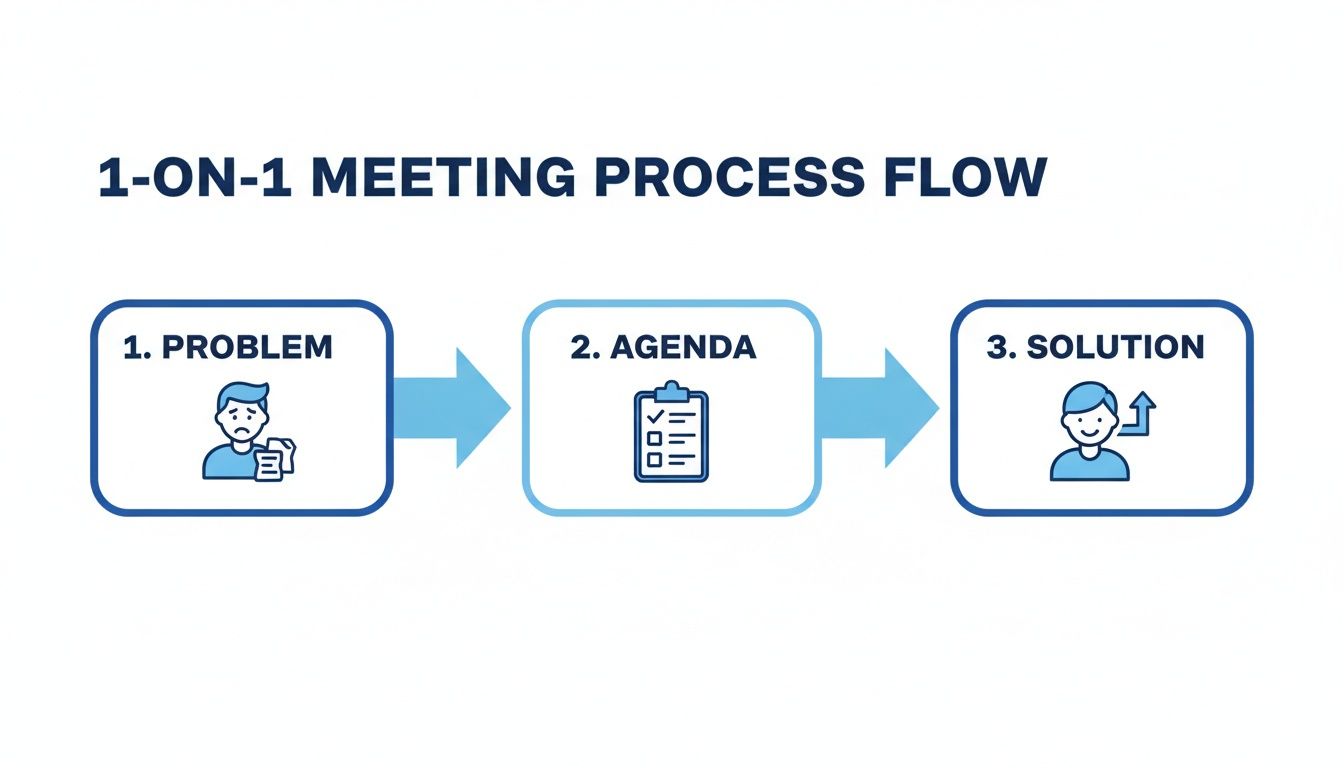
A simple checklist creates a bridge from workplace stress to employee clarity and satisfaction.
Essential 1 on 1 Agenda Components
To get this right, you need a predictable structure. This table breaks down the key elements I use, along with a rough time guide for a standard 30-minute meeting.
| Component | Purpose | Suggested Time (30 min meeting) |
|---|---|---|
| Personal Check-in | Build rapport and psychological safety. Show you care about them as a person. | 5 minutes |
| Priorities & Roadblocks | Give them the floor to discuss progress, wins, and obstacles. This is their time. | 10 minutes |
| Feedback & Recognition | Create a two-way street for constructive feedback and specific praise. | 5 minutes |
| Career Development | Discuss long-term goals and growth to show you're invested in their future. | 5 minutes |
| Action Items & Follow-up | Solidify next steps and ensure accountability for what was discussed. | 5 minutes |
This structure ensures you cover all the crucial bases, from building human connection to driving real progress.
Start with a Personal Check-in
Before discussing project updates and to-do lists, connect. A genuine personal check-in is the foundation for everything that follows. It builds psychological safety and signals that you see your team member as a whole person, not just a worker.
Keep it simple and open-ended. Ask about their weekend, a new hobby, or something they mentioned last time. This is not small talk. It is about creating a moment of human connection that makes the rest of the conversation more open and honest.
Shift to Their Priorities and Roadblocks
Next, the focus shifts to their work. The key word here is their. This part of the meeting is owned by your employee. It is their space to share progress, celebrate wins, and surface any blockers that are in their way.
Your job is to listen intently, ask clarifying questions, and be a thought partner. Encourage them to add their topics to a shared agenda beforehand. This act of preparation flips the dynamic from a manager’s interrogation into the employee's working session.
A great 1 on 1 is a meeting where the employee does 80% of the talking. Your agenda should be built to make that happen, putting their challenges and wins front and center.
Make Space for Feedback and Recognition
Dedicated time for feedback is required for growth. It must be a two-way street. You should offer specific, constructive feedback, but you also need to ask for it. Asking, "What can I do to better support you?" builds trust and fosters a culture where improvement is a team sport.
Recognition is also critical. Acknowledging specific contributions makes people feel seen and valued. Get specific. Do not say, "Good job." Instead, try, "I was impressed with how you handled that client's objection on yesterday's call. You kept things calm and found a solution."
Don't Forget Career Development
One of the most valuable things you do in a 1 on 1 is talk about the future. Discussing long-term growth shows your employee you are invested in their entire career, not just their output this quarter. It is where you align their personal ambitions with the needs of the company.
Make this a recurring topic, even if it is a quick check-in. You can explore skill development, long-term goals, or new responsibilities. To get these conversations flowing, you will need the right prompts. For inspiration, check out this list of one on one questions that covers many development topics.
Always Close with Clear Action Items
Never end a 1 on 1 without clear next steps. A vague conclusion like, "Okay, great chat!" kills all momentum and leaves people wondering if the meeting mattered. You have to translate the conversation into tangible action.
Summarize the key takeaways and define the action items in your shared agenda. Assign an owner and a due date to every one. This creates accountability and gives you a perfect starting point for your next conversation. When you start the next 1 on 1 by reviewing those items, you close the loop and build momentum.
Using Proven Frameworks to Build Your Agenda
Having a basic structure for your 1 on 1 agenda is a good starting point. Plugging in proven frameworks takes these conversations from good to great. Frameworks give you a reliable script for tricky discussions, whether you are delivering tough feedback or setting ambitious goals. They take the guesswork and emotion out of the equation. They replace them with clarity and objectivity.
Consider the common disconnect between a manager's perception and an employee's reality. One study found that while 94% of managers believe they hold regular one on ones, only 10% of employees agree those meetings are effective. Frameworks are the bridge that closes this gap, making every conversation intentional and impactful. You can review more of the data on this leadership blind spot at td.org.
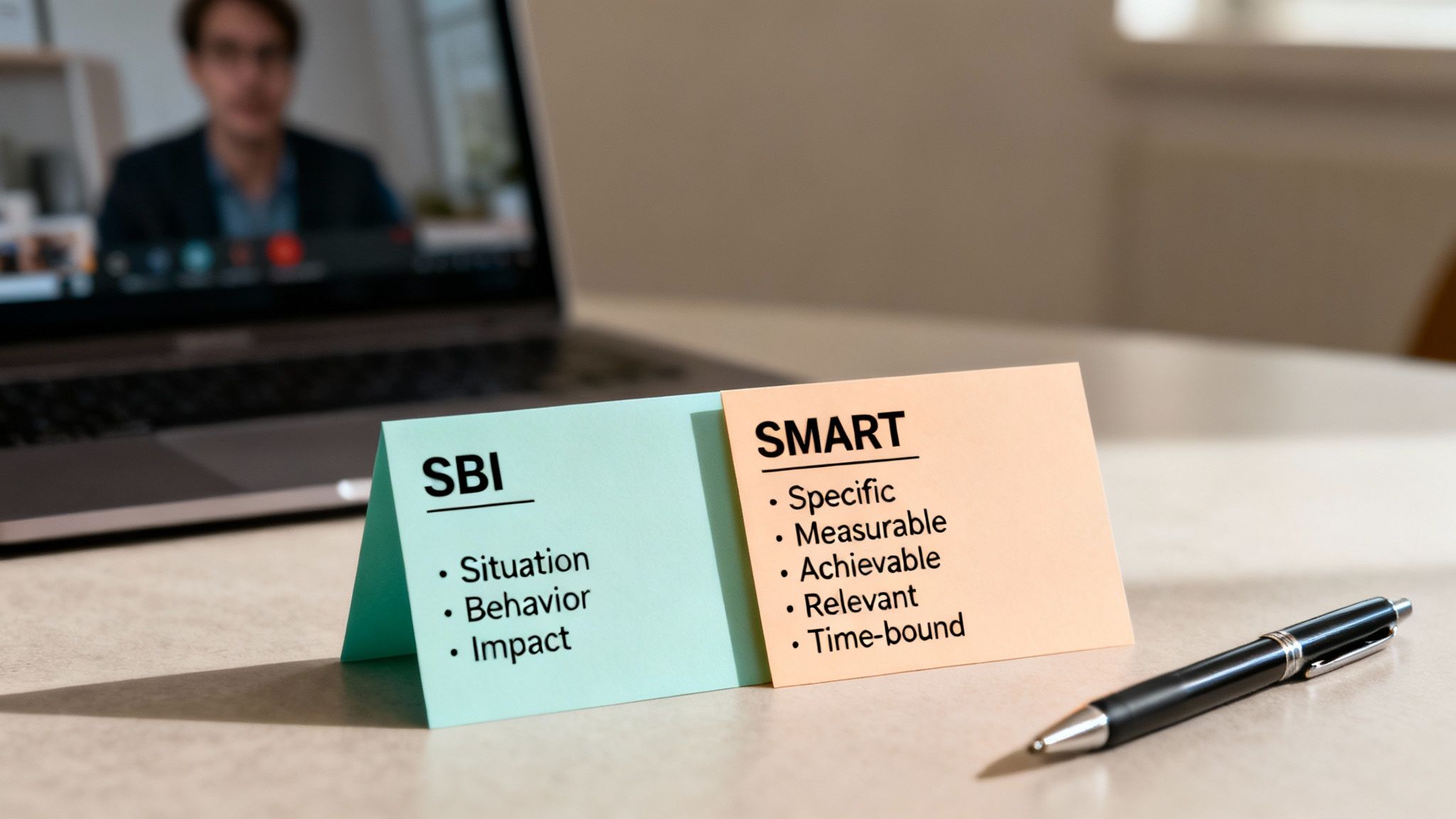
This level of preparation is what turns a simple chat into a session that drives progress.
Giving Feedback with the SBI Model
Delivering constructive feedback is one of the hardest parts of being a manager. Feedback feels personal or vague, which puts people on the defensive. The SBI (Situation-Behavior-Impact) model helps here. It is a simple tool that keeps your feedback focused on facts, not feelings.
Here is the breakdown:
- Situation: Describe the specific when and where the behavior happened.
- Behavior: State the exact, observable actions the person took. No interpretations.
- Impact: Explain the consequences of that behavior on you, the team, or the project.
Using SBI removes judgment. Instead of a vague and subjective comment like, “You were unprofessional in the client meeting,” you get specific.
For example, your agenda item is “Debrief Project Alpha client call.” In the meeting, you say, “During yesterday’s Project Alpha call with the client (Situation), you interrupted them three times while they were explaining their concerns (Behavior). The impact was that it seemed we were not listening. I am worried that damaged their trust in our team (Impact).”
This approach is direct, specific, and hard to argue with because it is rooted in observable facts. It opens the door for a productive conversation about what to do differently next time, rather than a debate over your opinion.
A framework like SBI transforms a tense moment into a coaching opportunity. By focusing on a specific event and its outcome, you make it easier for your team member to absorb the feedback and take action without feeling personally attacked.
Setting Goals with the SMART Framework
Another function of the 1 on 1 is mapping out career development and setting goals. A classic mistake is talking about goals in fuzzy terms, like “get better at presentations.” It is a nice sentiment, but it gives your employee zero direction. The SMART framework helps. It helps you turn a vague aspiration into a concrete, actionable plan.
A SMART goal is:
- Specific: What, exactly, do you want to accomplish?
- Measurable: How will you track progress and know when you have succeeded?
- Achievable: Is this goal realistic and attainable?
- Relevant: Does it align with the employee’s role and the team’s larger objectives?
- Time-bound: What is the deadline?
Let us take the “get better at presentations” idea and make it SMART. On your agenda, you might list a topic like “Q3 Development Goal.” In your chat, you work together to expand on it.
Example of a SMART Goal
Instead of a fuzzy idea, you land on a clear target: By the end of Q3, the employee will independently lead two internal team presentations on their project progress. To get there, they will complete an online public speaking course and do two practice runs with you before each presentation. Success will be measured by peer feedback on clarity and confidence.
See the difference? This detailed plan gives them a clear roadmap. They know what is expected, and you both have a shared understanding of what success looks like. It transforms a vague concept into a real project with clear milestones and a deadline. To get more ideas, check out our guide on applying SMART goals for performance management. This process shows you are invested in their growth and gives them the structure they need to succeed.
1 on 1 Agenda Templates for Different Scenarios
A generic 1 on 1 agenda is fine for a routine check-in. Not every conversation is routine. A chat about a missed deadline needs a different tone and structure than one about long-term career dreams.
When you tailor your agenda, you send a clear signal: this conversation matters, and I have put thought into it. It is how you move a meeting from a simple status update to a productive, focused discussion. That preparation builds trust and makes the time you spend together count.
The Weekly Sync Up Template
Think of this as your go-to template, the reliable rhythm for your weekly or bi-weekly meetings. The main goal here is to stay aligned, remove any roadblocks, and check in on a human level. The key is that this meeting should be employee-driven. It is their time to talk about what is on their plate.
- Human Check-in (5 minutes): Before discussing work, connect. "How was your weekend?" or "How is that personal project you mentioned going?" It makes a big difference.
- Their Agenda (10 minutes): This is their floor. Let them lead with what is top of mind. You can prompt them with questions like, "What are your top priorities this week?" or "Where are you feeling the most momentum?"
- Roadblocks & Support (10 minutes): Now it is your turn to help. The single most direct question you ask is, "What is one thing I can do to make your week easier?" It cuts right to the chase.
- My Updates & Next Steps (5 minutes): Keep this part brief. Share any relevant team news, clarify action items from the conversation, and you are done.
The weekly sync should feel like a reliable touchpoint, not a surprise inspection. A consistent agenda builds a predictable rhythm that encourages your people to open up.
The Focused Feedback Template
Giving constructive feedback is an art. It demands a more deliberate structure. You want to be direct without being harsh, objective without being cold. The right agenda helps you frame the conversation so it lands as helpful guidance, not an attack.
- Set the Stage (5 minutes): Be upfront about the meeting's purpose to avoid any surprises. Say something simple like, "I wanted to chat about the client presentation from Tuesday to make sure we are aligned for the next one."
- Share Observations with SBI (10 minutes): The Situation-Behavior-Impact model is your best friend here. It keeps things factual. For example: "During the Q&A part of the presentation (Situation), you answered three questions with one word (Behavior). I noticed the client stopped asking questions after that (Impact)."
- Listen to Their Side (10 minutes): This is not a monologue. After you share your observation, pause and ask, "What was your perspective on that moment?" This step is critical for building mutual understanding.
- Collaborate on a Solution (5 minutes): Work with them to define what a better outcome looks like. Agree on one specific, actionable step they take next time.
The conversation itself is only half the battle. If you are not tracking what was discussed, you will have the same conversation again in a month. Keeping solid records is necessary. Check out these top templates for meeting notes to keep your discussions documented and your follow-ups effective.
The Career Development Template
Talking about long-term growth is one of the best ways to show your team members you are invested in them as people, not just as employees. These conversations, held at least twice a year, shift the focus from today's to-do list to tomorrow's aspirations.
- Reflect on Wins & Goals (10 minutes): Start by looking back. "What piece of work are you most proud of from the last six months?" or "Which of your goals right now gives you the most energy?"
- Explore What's Next (10 minutes): Now, look ahead. "What new skill do you want to develop over the next year?" or "What kind of project would get you one step closer to where you want to be in your career?"
- Connect Aspirations to Opportunities (5 minutes): This is where you connect the dots. Brainstorm real projects, potential mentors, or training programs that line up with what they told you.
- Define One SMART Goal (5 minutes): Do not leave the meeting with vague ideas. Co-create one clear, actionable SMART goal. For instance: "By the end of Q3, you will complete the advanced analytics certification and lead a lunch and learn to share what you learned with the team."
Choosing the right agenda depends on the conversation you need to have. To make it easier, here is a quick comparison of the different meeting types.
Comparison of 1 on 1 Meeting Types
| Meeting Type | Primary Focus | Typical Frequency | Key Agenda Items |
|---|---|---|---|
| Weekly Sync Up | Alignment, roadblocks, well-being | Weekly or Bi-weekly | Employee priorities, manager support, quick updates. |
| Focused Feedback | Addressing a specific behavior or event | As needed | Stating purpose, using SBI, listening, co-creating solutions. |
| Career Development | Long-term growth and aspirations | 2-4 times per year | Reflecting on achievements, exploring future goals, brainstorming opportunities. |
Having a few distinct templates in your back pocket allows you to be intentional. It ensures that no matter the topic, your 1 on 1s are always focused, productive, and valuable for both you and your team member.
Running the Meeting and Following Up for Results
A perfect 1 on 1 agenda is a great start, but it is a start. The real effect happens in how you run the meeting and what you do afterward. Great execution turns a document into a dynamic conversation. Solid follow-up turns that conversation into real, measurable action. Without both, the best plans fall flat.
This is where you switch from planner to coach. Your main job during the meeting is not to talk. Your job is to create an environment where your employee feels safe enough to be open and honest. You get there by listening more than you speak, asking thoughtful questions, and steering the conversation back to the agenda when things go off track.
Encourage Your Employee to Lead
The best 1 on 1s are not status reports for the manager. They are working sessions for the employee. For that to happen, your team member needs to do most of the talking. This means you have to consciously hand over the conversational reins.
When employees drive the discussion, the topics that come up are the ones that are important to their immediate challenges and goals. This shift empowers them, builds a sense of ownership, and gives you unfiltered insights into what is going on. It is the difference between an interrogation and a partnership.
This is important. Research shows that when employees get clear guidance on priorities in their 1 on 1s, they are 2.5 times more likely to balance their productivity with their personal life. The ideal balance is having employees drive 50-90% of the conversation, moving beyond simple updates to a real dialogue.
Master the Art of Active Listening
During the meeting, your primary job is to listen. It sounds simple, but it is a skill that takes practice. Active listening means you are focused on what is being said, not waiting for your turn to jump in.
Here are a few ways to put it into practice:
- Summarize what you hear. Restate their points in your own words. "So if I am hearing you right, the biggest roadblock with the new software is the lack of training docs."
- Ask clarifying questions. Dig deeper with open-ended questions. Instead of, "Is that a problem?" try, "How is that impacting your workflow?"
- Pay attention to non-verbal cues. Their tone of voice and body language often say more than their words.
This level of attention shows you respect their perspective and helps you get to the root of any issues they bring up.
When you listen, you are not gathering information. You are building trust. Your employee feels heard and valued, which is the foundation of any strong working relationship.
Track Action Items Religiously
A 1 on 1 without clear action items is a nice chat. Every meeting needs to end with a concrete list of next steps. This is how you turn conversation into tangible results and build a culture of accountability.
Do not leave this to memory. In the last few minutes of the meeting, explicitly summarize the commitments you have both made.
Example Action Item Log
- Action Item: Alex to schedule a 30-minute demo of the new reporting tool for the team.
- Owner: Alex
- Due Date: Friday, Oct 27
- Action Item: Maria (Manager) to get an answer from Finance on the budget for the certification course.
- Owner: Maria
- Due Date: Wednesday, Nov 1
Keep these documented in a shared space, like your collaborative agenda or a project management tool. It creates a visible record that keeps everyone honest.
The Power of the Follow-Up
The follow-up closes the loop. It is where you prove that the commitments made in the meeting meant something. Your next 1 on 1 should always start by reviewing the action items from the last one.
This simple habit has a strong ripple effect. It shows your team you follow through on your promises and that you expect the same from them. Over time, this consistency builds a reliable system for making progress and solving problems. It reinforces that these meetings are not talk. They are a core part of how your team gets work done and grows together.
While these tips are for 1 on 1s, many of the same principles apply to larger groups. To broaden your impact, check out our guide on how to run effective team meetings.
Your Top 1 on 1 Agenda Questions, Answered
Even with the best intentions, rolling out a new meeting process feels clunky at first. A shared 1 on 1 agenda is a great tool, but only if you get the execution right.
Let's walk through some of the most common questions and sticking points managers face when they first start using structured agendas.
How Often Should I Hold 1 on 1 Meetings?
There is no single magic number here. It depends on your team's context. For most teams, every two weeks is a great starting point. It is frequent enough to stay connected but not so often that it clogs up everyone's calendar.
You should always adjust to the situation:
- Weekly meetings are helpful for new hires who are still getting their bearings or for teams in the middle of a high-stakes, fast-moving project.
- Monthly meetings work for senior, highly autonomous reports who do not need frequent check-ins to stay on track.
The real key? Consistency. You want to establish a reliable rhythm your team counts on. The best way to find the right cadence is to ask them what they feel would be most helpful.
What if My Employee Doesn't Add to the Agenda?
This is the most common hurdle, especially when you first introduce a collaborative 1 on 1 agenda. It happens because people are not used to being asked to co-own the meeting.
Your first move is to set a clear expectation: their input is essential for the meeting to work.
Try giving them a simple template with specific prompts like "My top priorities" or "Where I am blocked." If they are still hesitant, nudge them with an open-ended question before the meeting. A quick Slack message like, "Hey, what is one topic we could discuss that would help you out this week?" works well. Once they see you act on their contributions, they will start adding items on their own.
The goal is to shift the meeting's ownership. When an employee sees their agenda items lead to real problem-solving, they understand the value and start taking the lead.
How Do I Handle Difficult Feedback on the Agenda?
The golden rule is to never ambush someone with tough feedback. Adding an item to the agenda gives them a heads-up and a chance to prepare mentally.
Instead of writing something blunt like, "Give feedback on your presentation," frame it as a more neutral, collaborative topic, such as, "Discuss Project X presentation."
When it is time to deliver the feedback, lean on a framework like SBI (Situation-Behavior-Impact) to keep the conversation objective and focused on facts, not feelings.
For example: "In this morning's client meeting (Situation), you interrupted the client twice while they were sharing their concerns (Behavior). I am worried this came across like we were not fully listening. This might have damaged their trust in our solution (Impact)."
After you share your observation, the most critical step is to pause and give them space to share their perspective. Always wrap up the conversation by agreeing on a few clear, actionable steps they can take moving forward.
What's the Biggest Mistake People Make with the 1 on 1 Agenda?
The most common mistake is letting the meeting turn into a status report for the manager. When the entire conversation is a rundown of project updates and deadlines, it misses the point. It does nothing to build trust or support an employee's long-term growth.
A 1 on 1 agenda should never be a manager's checklist.
An effective 1 on 1 is a two-way street that puts the employee first. It is their time, dedicated to their challenges, their career development, and their well-being. You know you are having a great 1 on 1 when your employee is doing most of the talking, using the agenda as their guide to get the support they need to succeed.
Prepping for big leadership moments is draining. PeakPerf is a lightweight management toolbox built to help you prepare for your toughest conversations, from giving feedback to career planning. Turn hours of prep into minutes and walk into every meeting feeling confident. Build your first conversation guide for free.


