How to Build High Performing Teams: A Modern Leader's Guide
Building a high-performing team involves creating a culture where excellent results are the natural byproduct of teamwork. This requires psychological safety, clear communication, and mutual accountability. Getting this foundation right provides a blueprint for every leadership move you make.
Defining High Performance
Before you build a high-performing team, you must define what one looks like in your organization. Without a clear, shared definition, you operate without a standard. This leads to inconsistent evaluations and confusion for your team.
A solid definition tracks more than outputs. It includes the behaviors that fuel sustainable success. This is not about a group of individual top performers. A high-performing team is a unit where people trust each other, challenge ideas constructively, and hold one another accountable for shared goals.
The Four Pillars of a High Performing Team
The best definitions balance results with the behaviors used to achieve them. It helps to anchor your definition in four key areas.
This table breaks down the essential components of a high-performing team, giving you a quick reference to evaluate your own team.
| Pillar | Description | Key Action for Leaders |
|---|---|---|
| Psychological Safety | Team members feel safe to speak up, ask questions, and admit mistakes without fear of punishment. | Actively ask for dissenting opinions in meetings and thank people for them. When someone admits an error, focus on the solution, not the blame. |
| Clear Communication | Information flows freely and openly. Feedback is direct and constructive, and everyone understands the team's direction. | Communicate your team's vision and priorities often. Establish clear communication channels and model the feedback style you want to see. |
| Mutual Accountability | People take ownership of their work and hold their peers to the same high standards, creating a culture of collective responsibility. | Do not be the only source of accountability. Encourage peer-to-peer feedback and create public commitments for team-level goals. |
| Shared Purpose | Everyone on the team understands and is motivated by a common mission, connecting their individual tasks to a larger objective. | Constantly connect daily tasks to the "why." Celebrate team wins that contribute to the company's mission. |
Focusing on these pillars helps you build a team that hits its numbers and fosters a healthy, collaborative environment. For more on creating elite teams, read this comprehensive guide on how to build high performing teams.
Connecting Daily Work to the Big Picture
Once you have a consistent definition of success, you can set meaningful goals. When you involve employees in the goal-setting process, their productivity can increase by 12%.
For managers, tools like SMART goals are critical. They help you translate large company objectives into concrete actions for your team. Organizations with advanced performance systems are 4.2 times more likely to financially outperform their competitors.
This flowchart shows how this process works.
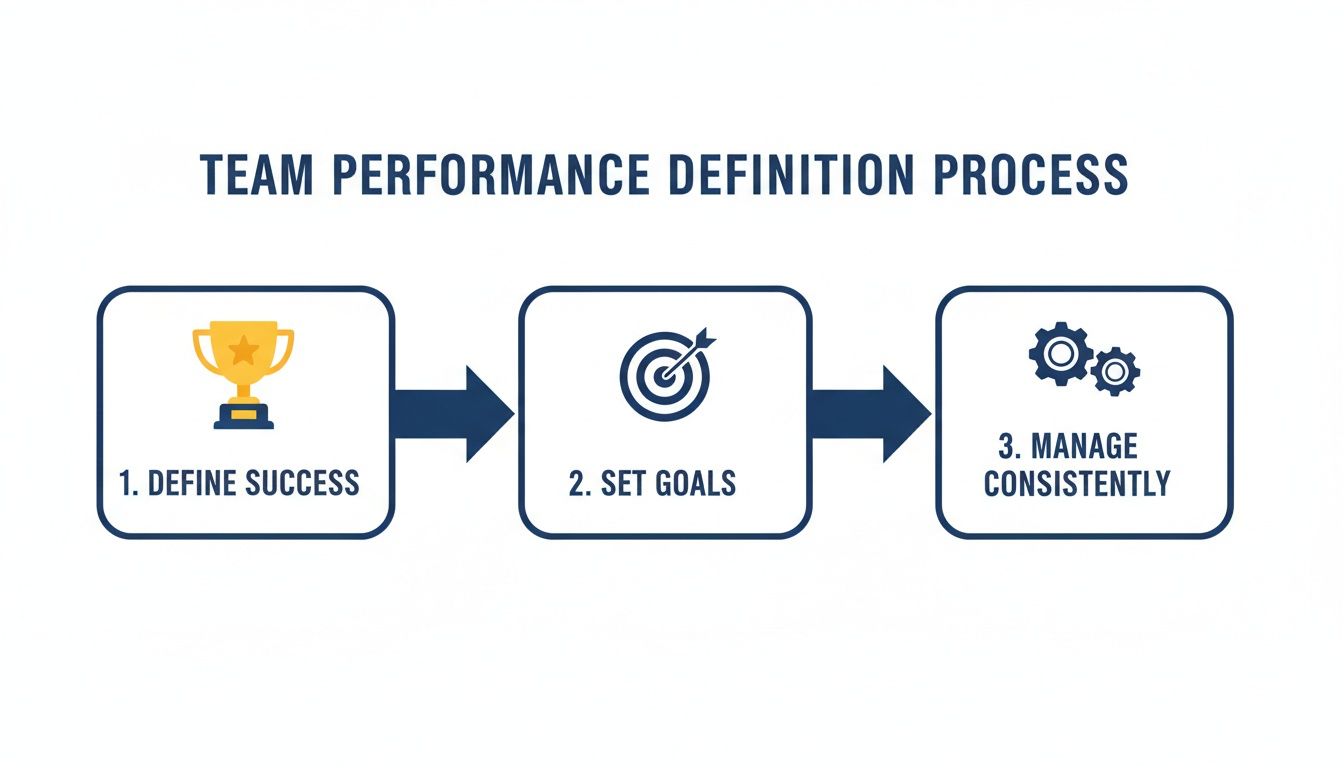
This cycle creates a clear, repeatable system for aligning everyone on what matters. A standardized approach gives you the fairness and clarity you need to lead. You can learn more in our guide on the best practices for performance management.
A Blueprint for Hiring and Onboarding Talent
Building a high-performing team begins before someone's first day. It starts with a hiring process that assesses more than technical skills on a resume. You look for people who master their craft and embody the behaviors you have identified as crucial for peak performance. Your interview process must be built to uncover both.
You must move beyond generic interview questions. Ask questions that get candidates to share specific stories from their past. This is the single best predictor of how they will act on your team.

Designing Interviews That Reveal True Fit
To understand a candidate’s ability to collaborate and solve problems, behavioral questions are your best tool. These questions make candidates describe how they handled specific work situations in the past. Your goal is to see tangible proof of the traits you seek, like accountability, adaptability, and open communication.
For example, do not ask, "Are you a team player?" Instead, try, "Tell me about a time you had a significant disagreement with a colleague on a project." Then, listen closely. How did they work through the conflict? What language did they use to talk about their coworker? What was the outcome they wanted?
A well-structured interview process is your best defense against bias. When you assess every candidate against the same set of behavioral and skill-based criteria, you create a level playing field that prioritizes team fit over a gut feeling.
Here are a few questions for digging into key high-performance behaviors:
- To check for accountability: "Tell me about a time you missed a deadline or made a significant mistake. How did you handle it, and what did you learn?"
- To gauge collaboration skills: "Describe a complex project where you had to work closely with people from different departments. What was your role, and how did you ensure everyone stayed aligned?"
- To see how they handle feedback: "Walk me through a situation where you received tough feedback from a manager or a peer. What was the feedback, and how did you respond?"
This approach gives you concrete evidence of how a person operates within a team. It moves the conversation from hypotheticals to proven actions.
Creating an Onboarding Plan for Peak Performance
You have made the hire. Now, the onboarding process is your first chance to set a clear standard for performance. A great onboarding experience tells your new hire they made the right choice. A disorganized one plants doubt and confusion from the start.
The goal of onboarding is to integrate new team members efficiently. Give them the knowledge, relationships, and tools they need to become productive and feel like they belong quickly.
A structured 30-60-90 day plan is an effective way to do this. It breaks down the first three months into manageable phases with clear expectations.
- First 30 Days: The focus is on learning and integration. Your new hire should meet key people, learn team processes, and understand your core systems. The goal is absorption, not output. Give them small, achievable tasks that let them learn by doing.
- Next 30 Days (The 60-day mark): You start to shift the focus toward contribution. The team member should begin taking ownership of smaller projects or specific responsibilities. This is the perfect time to introduce them to more complex challenges and encourage them to share ideas.
- Final 30 Days (The 90-day mark): The goal is autonomy. By this point, your new hire should manage their core responsibilities with minimal supervision. They should be able to solve routine problems and be fully integrated into the team’s workflow.
Assigning an onboarding buddy is another simple tactic. This gives the new person a contact for informal questions, helping them learn the company culture and build social connections faster.
Finally, establish an early feedback rhythm. Schedule weekly check-ins during the first month to answer questions, offer guidance, and provide course correction. This proactive communication stops small issues from becoming big problems and reinforces that feedback is a normal part of your team's culture. This systematic approach removes uncertainty and puts new hires on a direct path to becoming a valuable part of your team.
Setting Clear Goals and Defining Roles
Ambiguity kills high-performing teams. When people are not sure what they own or what success looks like for their role, they hesitate. That hesitation leads to duplicated work, missed deadlines, and frustration.
If you want to build an elite team, you must remove that confusion. It starts with defining roles with precision and setting goals that are impossible to misinterpret. Without that foundation, you cannot have accountability. People cannot own outcomes they do not know are theirs.

From Team Objectives to Individual Tasks
This process must start from the top down. Your team's objectives must directly reflect the company's wider goals. Once you have those, you need to break them down into specific, individual responsibilities.
Every person on your team should be able to draw a straight line from their daily tasks to the company's mission. That connection transforms a to-do list into a meaningful contribution. When people see how their work moves the business forward, their engagement and motivation increase.
A simple roles and responsibilities document helps. Outline the primary duties, decision-making authority, and key collaborators for each position. This document is the best defense against tasks falling through the cracks because everyone assumed someone else was handling it.
Using SMART Goals to Drive Performance
Clear goals are the language of high-performing teams. Vague targets like "improve customer satisfaction" sound nice but are useless in practice. You need goals that are concrete and measurable, which is where the SMART framework helps. It is a classic because it forces you to get specific.
A SMART goal is:
- Specific: What do you want to accomplish? Get granular.
- Measurable: How will you track progress and know when you have succeeded?
- Achievable: Is this realistic given your resources and constraints? Be ambitious, not delusional.
- Relevant: How does this align with the bigger team and company objectives? Why does this matter now?
- Time-bound: What is the deadline?
This structure removes guesswork. Everyone knows the target, how it is measured, and when it is due. We explain this more in our guide to using SMART goals for performance management. It is about making sure every objective is actionable.
Setting clear, ambitious goals is one of the most effective ways to motivate a team. Research shows that specific and challenging goals lead to higher performance than easy or vague goals.
For instance, instead of the fuzzy "increase sales," a proper SMART goal sounds like this: "Increase new enterprise sales revenue by 15% in Q3 by closing at least 10 new accounts valued at over $25,000 each." The difference is clear. It is specific, measurable, achievable, relevant to growth, and locked to a timeframe.
Documenting Goals for Accountability and Growth
An unwritten goal is a wish. Writing down roles, responsibilities, and SMART goals in a central, accessible place creates a single source of truth for the entire team. This is not about micromanagement. It is about creating clarity and empowering your people to execute with confidence.
Modern management tools like PeakPerf are built for this, making it simple to document and track goals. This documentation becomes the bedrock for productive 1-on-1s and fair, objective performance reviews. During check-ins, you can pull up the documented goals and have a conversation about progress, roadblocks, and support needs.
This practice also reduces recency bias during annual reviews. Instead of focusing on the last few weeks, you can look back at an entire period's progress against defined targets. It shifts performance conversations from subjective opinions to objective, data-informed discussions about results.
With a transparent system like this, every team member knows what is expected of them. They know what winning looks like in their role and how their contributions help the entire team succeed. That level of clarity is non-negotiable.
Mastering Feedback and Consistent Coaching
Once you have defined roles and set goals, your team needs fuel to keep running. That fuel is consistent coaching and feedback. It is the ongoing dialogue that stops small issues from becoming big problems and keeps everyone aligned and motivated.
Many managers I know avoid giving feedback. They worry it will spark conflict or kill someone's motivation. This usually happens when feedback is saved for formal reviews, making the process feel high-stakes. The trick is to change the approach. Move from infrequent, formal critiques to frequent, informal coaching conversations. That is how you build trust and get people to open up.
The Power of Manager-Led Coaching
Your day-to-day impact as a manager is significant. A recent Gallup report showed a staggering statistic: managers account for 70% of the variance in team engagement. The same report found that 56% of managers have not received basic training on how to lead people.
When you invest in equipping managers with the right coaching tools, the results are huge. This includes a potential 18% increase in team engagement and a 20-28% improvement in performance. The data is clear. If you want a high-performing team, start by sharpening your own coaching skills. You can find more of these insights from the team at Inclusion Geeks.
Making Feedback Actionable with the SBI Model
For feedback to work, it must be specific and non-judgmental. I use the SBI model, which stands for Situation, Behavior, Impact. It is a simple but effective way to frame these conversations. It removes emotion and personal opinions, forcing you to focus on observable facts and their real-world consequences.
Here’s the breakdown:
- Situation: First, you pinpoint the specific "when" and "where." This gives the feedback context and grounds it in a real moment.
- Behavior: Next, describe what the person did. You stick to the facts, what you saw or heard. Do not guess their intentions.
- Impact: Finally, you connect the dots. Explain the effect their behavior had on you, the team, or the project. This is the "why it matters" part.
Using this model helps the other person see what happened and why it was a big deal, which makes them less likely to get defensive. It turns a conversation you might dread into a productive coaching moment.
The goal of feedback is not to criticize. It is to help someone see the direct result of their actions so they can decide whether to repeat them or change them.
Applying the SBI Feedback Model
The SBI framework is versatile. It works for recognizing great work and for course-correcting. It is about providing clarity.
Here is a practical guide showing how to structure your feedback for a few common scenarios. You will see how this simple structure keeps the conversation focused and productive.
| Scenario | Situation (When/Where) | Behavior (What you observed) | Impact (What was the result) |
|---|---|---|---|
| Recognizing Good Work | "During this morning's client presentation..." | "...you clearly explained our new data, answered every question with confidence, and stayed calm when the client challenged a key finding." | "...This built trust with the client, and they signed off on the next phase of the project immediately after the call. Great work." |
| Addressing a Missed Deadline | "On the Q3 report that was due yesterday..." | "...I noticed the financial projections section was missing when you submitted it." | "...This meant our leadership team did not have the full picture for their planning meeting this morning, and we had to reschedule part of the discussion." |
| Coaching on Meeting Etiquette | "In our team meeting this afternoon..." | "...I saw you were on your laptop and responding to messages while Sarah was presenting her update." | "...The impact was the team felt disengaged, and it sent a message that her presentation was not a priority. We must all give each other our full attention." |
The feedback is direct, factual, and tied to a real outcome. This makes it much easier for the person to hear it and act on it.
Establishing a Consistent Rhythm
Great coaching is not a one-time event. it is a habit. To make it stick, you need a consistent rhythm of one-on-one meetings. These are the most important tool in your toolkit for building trust, offering support, and keeping your team moving in the right direction.
Get recurring one-on-ones on the calendar, weekly or bi-weekly is usually best, and then protect that time. This dedicated space is where you can discuss progress, clear roadblocks, and deliver timely SBI feedback before small things grow.
Preparing for these talks can feel like another item on your to-do list. Tools like PeakPerf are built to cut that prep time down by giving you structured workflows and proven frameworks. You can generate a quick draft for your feedback, tweak the tone to be more supportive or direct, and walk into your meeting feeling prepared.
This kind of consistency turns manager anxiety into effective coaching, strengthening your team one conversation at a time.
Driving Growth with Performance Reviews
Performance reviews have a bad reputation. For most people, they are a dreaded annual meeting filled with anxiety and critiques about things from months ago. High-performing teams see them differently. They treat reviews as a key part of a continuous growth cycle, not a final judgment.
When you do it right, a performance review is a tool for development. It can shift a mandatory HR process into a catalyst for professional growth. This means moving from grading past performance to building a forward-looking plan that connects a person’s ambitions with the team’s future.

Building Meaningful Development Plans
At the heart of a modern performance review is the Individual Development Plan (IDP). Think of an IDP as a structured agreement between you and your team member that maps out their professional growth. It is about answering the question, "Where do you want to go, and how can I help you get there?"
Creating a solid IDP is a collaborative discussion. Your job is to understand their long-term career goals and find where their ambitions overlap with the organization's needs.
An effective IDP has four key parts:
- Career Aspirations: What does this person hope to achieve in the next one to three years? It could be a promotion, mastering a new skill, or shifting into a different role.
- Development Goals: Turn those aspirations into concrete, actionable goals. This is a perfect place to use the SMART framework to define what they will accomplish.
- Actionable Steps: Get specific. What actions will they take? This could be enrolling in an online course, finding a mentor, or leading a challenging new project.
- Required Support: What do they need from you or the company to succeed? This might be a training budget, protected time for learning, or an introduction to another leader.
This whole process makes development intentional. It sends a clear signal that you are invested in their future, which is a massive driver for retention and engagement.
Conducting Fair and Forward-Looking Reviews
For a performance review to motivate someone, it has to feel fair and consistent. The biggest threat to fairness is recency bias, our tendency to give more weight to recent events. You cannot let a whole year's worth of work be defined by a great or rough last month.
The solution is simple: document performance milestones and feedback all year. Your regular one-on-ones are the perfect time for this. Keep notes on big wins, tough challenges, and any feedback you have already delivered.
A great performance review should contain zero surprises. It is a summary of conversations you have been having all year, leading to a formal plan for what is next.
When you walk into a review with a year's worth of notes, the conversation changes. It stops being a subjective assessment and becomes a data-informed discussion about patterns and results over time. If you need help structuring these conversations, a solid employee performance review template can give you the framework for a fair discussion.
Transforming Performance Management
By focusing on development and documenting progress continuously, you change what "performance management" means. It stops being a dreaded annual event and becomes an ongoing, supportive process. This approach builds trust and makes your team members feel seen and valued.
For more practical ways to make your evaluation process better and drive growth, read these 9 Performance Management Best Practices That Don't Suck. When you adopt these habits, you will find it easier to run reviews that inspire your team.
This continuous approach is the foundation of high-performing teams. When people know their growth is a priority and they will be evaluated fairly, they are far more willing to tackle big challenges, embrace feedback, and pour their energy into the team's success.
Got Questions? Let's Talk Team Performance
Even with a perfect playbook, you will run into challenges. This is part of leadership. Here are some of the most common questions I hear from managers trying to build and sustain a high-performing team, with answers designed for the real world.
How Do You Turn Around an Underperforming Team?
First, you must diagnose the real problem, not the symptoms. To do that, you need to see the situation from your team’s perspective.
Start by holding confidential one-on-ones. Your goal is to get honest feedback. Ask them what roadblocks they see, what the team dynamics feel like, and if they are clear on what is expected of them. This is how you uncover hidden issues like process friction or interpersonal conflicts that hold things back.
Once you have the information, it is time for a reset. Bring the whole team together to create new, clear goals that everyone agrees on. This is also the time to redefine who owns what. Ambiguity is the enemy of performance.
Finally, get into a consistent feedback rhythm. A simple framework like the SBI model helps you address performance gaps constructively. Use it to call out improvements. Focus on small, early wins to build momentum and restore the team's confidence.
What Is the Single Most Important Factor for a High-Performing Team?
It is psychological safety. This is the shared belief that it is okay to take interpersonal risks, to speak up, ask a "dumb" question, or admit a mistake without fear of being punished.
When a team feels psychologically safe, people are not afraid to challenge the status quo or flag a problem. This is the bedrock of open communication, collaboration, and innovation. Without it, your team holds back its best ideas and biggest concerns.
As a leader, you are the primary architect of psychological safety. You build it by modeling vulnerability, welcoming questions, and reacting to failure with curiosity instead of blame. Every other high-performance habit is built on this foundation of trust.
How Can I Build a High-Performing Team with a Limited Budget?
This is a common worry, but building a great team is less about the money you spend and more about the leadership you provide. You can drive huge improvements by focusing on the non-monetary things that increase engagement.
Here’s where to focus:
- Recognition: Acknowledge great work, both publicly and privately. Specific, timely praise is a motivator, and it costs you nothing.
- Growth Opportunities: Find ways to help your people develop new skills. This could be a mentorship program, a stretch assignment, or letting them lead a small project.
- Autonomy: Give your team members real ownership over their work. Trusting them to make decisions about how they get things done builds confidence and a deep sense of responsibility.
Above all, invest your time. Consistent one-on-ones where you offer coaching and show you care about their career are invaluable. These actions build commitment and drive performance without touching your budget.
For managers ready to turn these principles into practice, PeakPerf provides the tools you need. Stop spending hours stressing over how to prepare for feedback conversations, performance reviews, or development plans. In minutes, you can generate a structured, professional draft using proven leadership frameworks, so you can walk into every conversation with confidence. Learn more and get started for free at PeakPerf.


