A Practical Guide to the Perfect One on One Meeting Agenda
A solid one on one meeting agenda separates a random chat from a productive conversation about growth. When you arrive with a plan, you show respect for your team member's time. You also show you are invested in what they have to say.
Why You Need a Structured One on One Meeting Agenda
One-on-ones are not occasional catch-ups. They are the center of modern management where you build trust and drive performance. Without a clear agenda, these meetings become unfocused chats that consume time.
An agenda is your roadmap. It ensures you cover important topics and move beyond "What are you working on?" It signals to your employee that you are prepared. This time is dedicated to them.
This preparation shifts the dynamic from reactive problem-solving to proactive coaching. You create a space to talk about career goals, remove roadblocks, and share feedback. When your employee sees their own topics on the agenda, it is empowering. It gives them ownership and turns a monologue into a dialogue.
The Rise of the Frequent Check-in
The way we work has changed, and so has the frequency of these meetings. Since 2020, the number of one-on-one meetings has increased by over 500%.
The average professional now has about 278 of these meetings a year. This is a large jump from 45 before the shift to more flexible work. If you want to see the data, Reclaim.ai published the full research on modern meeting frequency. This increase shows how important these conversations are for keeping teams connected.
With professionals having nearly six one-on-ones every week, a formal agenda is necessary. It is the best defense against meeting fatigue. It is the only way to ensure every conversation has a purpose.
The Real-World Benefits of a Prepared Agenda
Using a consistent agenda does more than keep you organized. It creates predictability and psychological safety. Your team members know what to expect. They feel more comfortable discussing difficult topics.
Here is what you gain:
- Focus and Efficiency: An agenda keeps the conversation on track. Every minute counts. This respects everyone’s schedule.
- Deeper Employee Engagement: When people add their own items to the agenda, they feel heard and valued. This leads directly to higher engagement.
- Proactive Problem Solving: A good structure encourages both of you to identify challenges before they become crises.
- Consistent Growth Conversations: The agenda ensures you regularly discuss long-term career development. You do not cram it into an annual review.
A good one on one meeting agenda is more than a list. It is a communication tool that builds alignment and trust. It ensures important conversations happen.
What Goes Into a Good One on One Agenda?
A good one on one does not happen by itself. It is built on a repeatable framework that gives both you and your direct report a voice. The best method is a shared, collaborative document where you both add topics before the meeting. This simple habit turns a generic catch-up into a tool for growth.
An effective agenda needs to balance a few key things. It is not a project status update. You need dedicated space for your employee to bring their issues to the table. You need space to share important context. You also need space for conversations about feedback and long-term career growth. Without this structure, urgent items often crowd out important ones.
The point is to create a predictable rhythm. Your team member knows what to expect. This builds trust and encourages them to open up. The structure is also flexible enough to address timely issues.
This is how you transform a casual chat into a structured conversation that drives professional development.
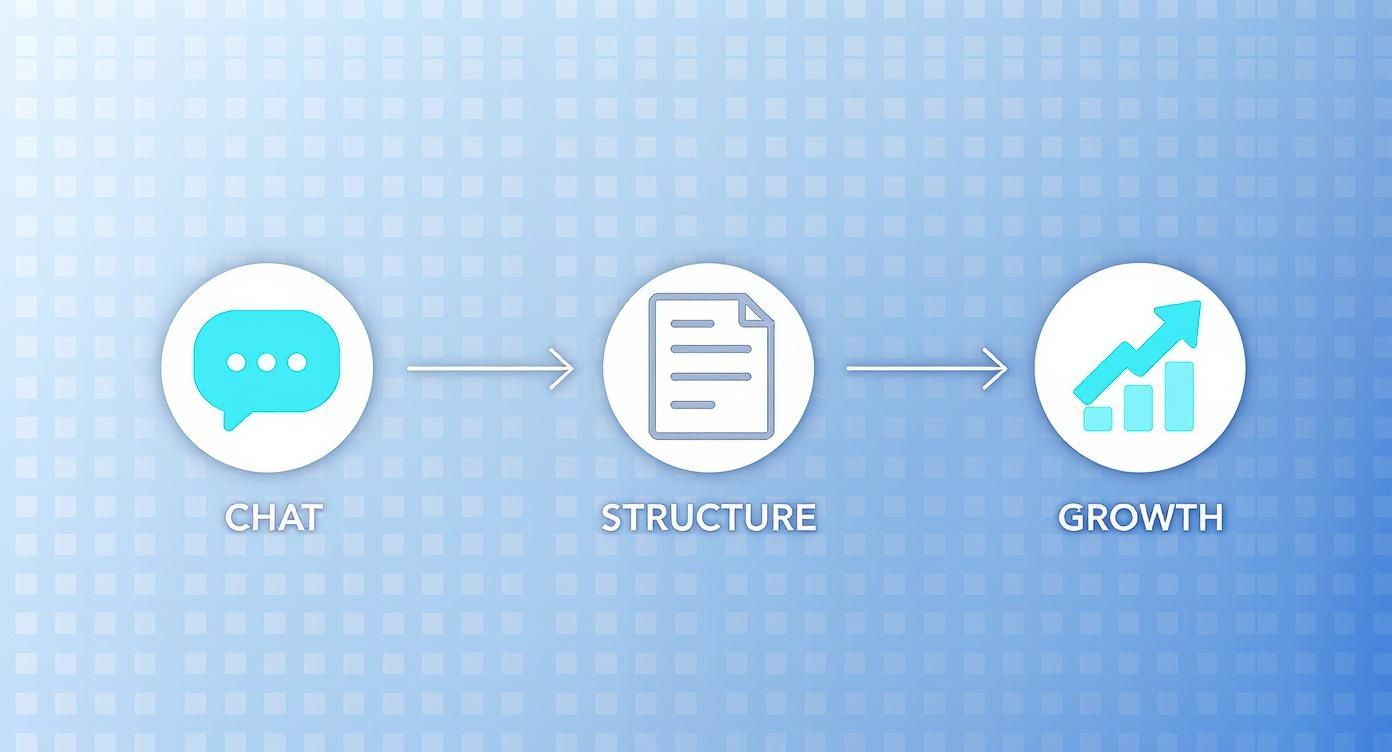
This simple flow from informal chat to intentional structure fuels measurable growth for your people.
Budgeting Your Time for Key Topics
Timeboxing helps keep one-on-ones on track. We have all experienced a simple project update that expands and consumes all the time. This means you skip career and feedback talks. Assigning specific time blocks to each part of the agenda prevents that.
A 45-minute meeting is a good length. It is long enough for meaningful discussions without feeling rushed or draining.
Here is a practical breakdown. It is a reliable template that ensures you cover all your bases.
Sample One on One Meeting Agenda Structure
This table breaks down a 45-minute one on one. It ensures you discuss all key points without one area dominating the meeting.
| Agenda Item | Purpose | Suggested Time |
|---|---|---|
| Employee's Agenda | Gives them the floor first to discuss wins, roadblocks, and questions. This empowers them to own the meeting. | 15 minutes |
| Manager's Agenda | Your turn to share company updates, align on priorities, or provide important context from a leadership level. | 10 minutes |
| Feedback & Recognition | A dedicated slot for two-way feedback. Give constructive input, recognize good work, and ask them for feedback on you. | 10 minutes |
| Growth & Development | Focus on long-term career goals, skill development, training opportunities, or progress on their development plan. | 10 minutes |
This structure is not fixed. Sometimes you will need to spend more time on a roadblock or a big win. The goal is to have a default that keeps your conversations balanced over time.
Your one on one meeting agenda should be a living document. Encourage your direct report to add topics during the week. This makes the meeting a reflection of current needs, not a recap.
Make it a Shared, Collaborative Document
This is not a meeting you run alone. It is a conversation you have together. The most effective agendas exist in a shared space. A Google Doc, a Notion page, or a dedicated tool works well. Both of you can add and see items.
When your employee adds their own topics, they take ownership.
This small act changes the dynamic from a manager-led report to a partnership. It guarantees the meeting is about what is on their mind. This improves engagement and makes them feel valued.
Actionable Agenda Templates for Any Conversation
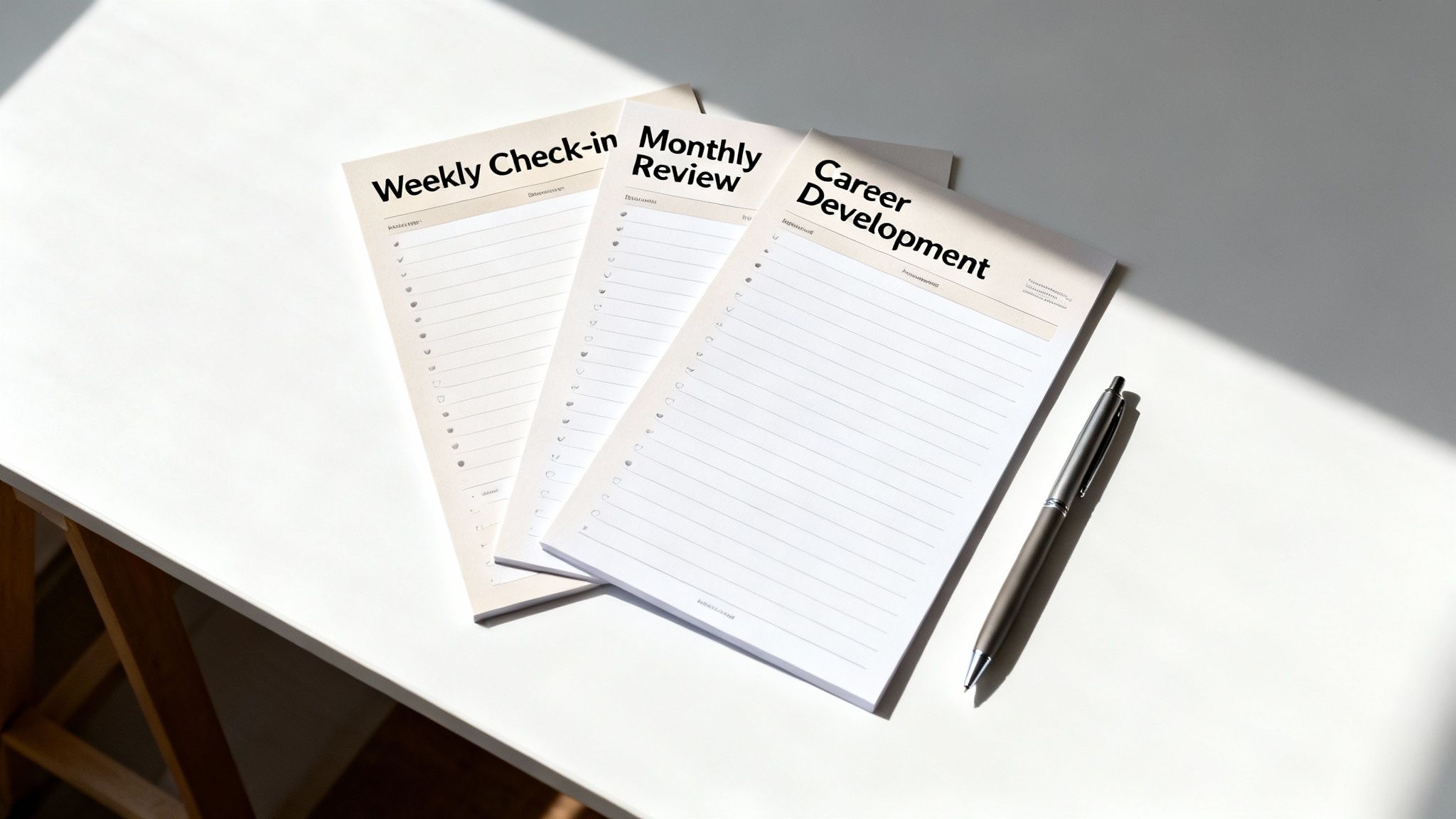
A one-on-one is not a one-size-fits-all meeting. The right agenda must adapt to the conversation you need. A weekly check-in serves a different purpose than a career discussion.
Using a specific template for each scenario is the best way to keep these conversations focused and productive. Below are three practical templates you can use immediately. Each is built for a specific type of conversation. They include talking points and questions that produce results. Think of these as your plan for any one-on-one.
The Weekly Check-In Agenda
The point here is to keep your team member aligned and unblocked. This meeting should be concise and tactical. It should focus on immediate priorities, recent progress, and any roadblocks.
- Employee’s Update (10 mins): Let them lead.
- What was your biggest win from last week?
- What are your top 1-3 priorities for this week?
- Are you facing any roadblocks I can help remove?
- Manager’s Update (10 mins): Your turn to provide context.
- Share relevant team or company news.
- Give quick feedback on current projects.
- Clarify priorities and connect their work to the bigger picture.
- Action Items (5 mins): End with clarity.
- Confirm next steps for both of you.
- Set clear owners and deadlines for any follow-up tasks.
This structure helps maintain momentum week-to-week without getting lost in long-term strategy.
The Monthly Performance Discussion Agenda
This meeting is more reflective than a weekly check-in. It focuses on outcomes and patterns over the past month, not a list of activities. The tone should be constructive and forward-looking.
- Review Past Month (15 mins):
- How do you feel about your progress toward your goals last month?
- What accomplishments are you most proud of?
- Where did you feel challenged or fall short of expectations?
- Feedback Exchange (15 mins): This is a two-way discussion.
- You provide specific, behavior-based feedback, both positive and constructive.
- They share feedback on your support and team processes.
- Discuss one thing you could each start, stop, or continue doing.
- Look Ahead (15 mins):
- What is the most important focus for the upcoming month?
- What support do you need from me to be successful?
A structured monthly review helps build a culture of continuous feedback. It eliminates surprises in annual performance reviews by making performance a regular, low-pressure topic.
The Career Development Conversation Agenda
This conversation is about their future. It is 100% focused on your employee’s long-term growth and aspirations. It is separate from their current project performance. You should have this conversation at least twice a year.
- Exploring Aspirations (15 mins):
- What parts of your job energize you the most?
- Where do you see yourself in the next 1-2 years?
- What skills or experiences do you want to gain?
- Identifying Opportunities (15 mins):
- Discuss potential projects, training, or mentorships.
- Brainstorm how to align their personal interests with business needs.
- Creating a Plan (15 mins):
- Define 1-2 actionable development goals.
- Establish a timeline and clear check-in points.
This dedicated time shows you are invested in them as a person, not their immediate output. It is a large driver of retention and engagement. For more ways to structure these talks, you can check our complete guide on the best agenda for a one on one meeting.
How to Adapt Your Agenda for Different Scenarios
A one-size-fits-all agenda does not work. The best leaders know that context should shape the structure, tone, and focus of their one-on-ones.
Adapting your approach shows you are tuned in to the unique needs of each situation. You might be managing a remote team, navigating a tough conversation, or getting a new hire up to speed. A flexible agenda is a mark of an effective manager.
A chat with a new hire is about building rapport and setting expectations. A conversation about a missed deadline requires a more direct, constructive framework. Your ability to pivot your agenda makes these meetings consistently productive.
Adjusting for Remote Employees
Virtual work has rewritten the rules for one-on-one meetings. The frequency of virtual check-ins increased by 1,230% between January and December 2020. Today, around 80% of people use video for these meetings. These meetings are the primary lifeline for remote connection.
When you cannot meet someone in person, your virtual one-on-one agenda must be explicit. Clarity is everything.
- Start with a real check-in. Do not jump into business. Spend the first five minutes connecting as people. Ask about their weekend or something else non-work-related to build that human connection.
- Over-communicate on action items. Be clear about next steps, who owns them, and when they are due. Document these in a shared space like Asana or a Google Doc right after the call.
- Make connection a priority. Remote work can be isolating. Dedicate time in your agenda to talk about their well-being, how connected they feel to the team, and what you can do to support them. Our guide on managing remote employees best practices has more strategies for this.
For a remote team, your one-on-one is more than a status update. It is often the main channel you have to build trust, offer support, and make sure your team member feels seen and valued.
Framing a Difficult Conversation
Tough conversations demand a carefully structured agenda. Without one, the discussion can go off track. The goal is to address the issue directly while keeping the relationship intact. Your agenda needs to signal that this is a serious but supportive talk.
Start by being direct in the agenda topic. Vague titles like "Project Check-In" create anxiety. Instead, be specific: "Discussion about Project X Deadline." This gives your employee time to prepare and shows respect.
- State the observation. Start by sharing a specific, factual observation of the behavior or issue. State the facts without judgment.
- Explain the impact. Connect the dots for them. Describe how that behavior affected the team, the project, or the business. This explains why it matters.
- Listen to their side. This is critical. Give them uninterrupted space to share their perspective. You might learn something new.
- Collaborate on a solution. Frame it as "us solving this together." Work with them to define clear next steps and a path forward.
This structure turns a confrontation into a collaborative problem-solving session. It frames the issue not as "you vs. me," but as a shared challenge.
Using Your Agenda to Drive Employee Engagement
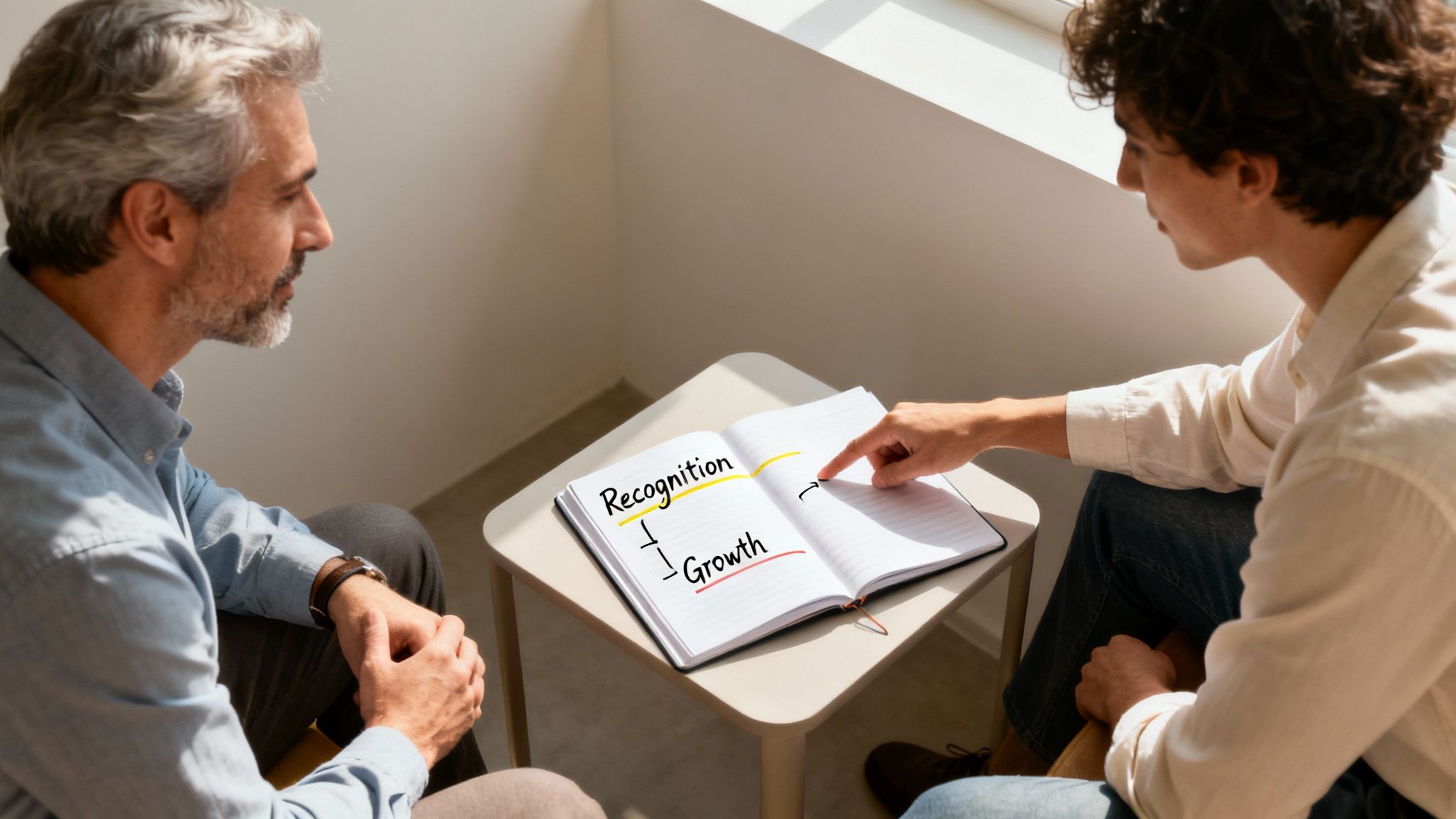
Your one-on-one meeting agenda is more than a to-do list. It is one of the most effective tools you have to show team members you are invested in their success. When you consistently create space for recognition, feedback, and growth, you build a foundation of trust.
This intentional structure elevates the conversation from a status update to a meaningful dialogue. When employees see their own goals and roadblocks on the agenda before the meeting starts, they feel heard. They feel valued. That feeling is the foundation of a healthy, supportive workplace culture.
Connecting the Agenda to Performance
A well-structured agenda sends a clear message. You care about an employee’s entire professional journey, not their output for the week. This focus on the individual separates a good manager from a great one. It has a direct, measurable impact on employee engagement.
The data supports this. According to one report, employees who have consistent one-on-ones are 430% more likely to be highly engaged. They are also 226% more likely to rate their overall experience at the company positively. Frequency also makes a difference. Weekly or bi-weekly check-ins increase an employee's belief that their leaders understand their day-to-day reality by 157%. You can read the full report on employee engagement and one-on-ones.
These numbers tell a story about how a recurring, structured conversation builds psychological safety and commitment over time.
When your team members know they have a dedicated time to discuss their growth, they become more proactive about their own development. The agenda becomes a shared roadmap for their career progression within the company.
This shift creates a self-sustaining cycle. Engaged employees perform better, which leads to more positive and constructive feedback. This in turn makes them feel more connected to the mission. It all starts with the agenda.
Practical Ways to Increase Engagement with Your Agenda
Turning your agenda into an engagement-driver is intentional. It depends on how you frame topics and what you prioritize in your limited time together.
Here are a few ways to make your agenda support and motivate employees.
- Make Recognition Specific and Timely. Do not have a vague "check-in." Add a standing agenda item called “Wins & Recognition.” Instead of a generic “good job,” tie their specific action to a real outcome. For example, "The detailed project brief you wrote for Client X saved the design team at least five hours of rework. That was a huge help."
- Frame Feedback as a Collaborative Effort. Change the "Feedback" heading. Try “Opportunities for Growth” or “How We Can Improve.” A good way to open this up is to ask, “What’s one thing I could be doing differently to better support you?” This signals that feedback is a two-way street.
- Prioritize Their Agenda Items. This is a simple but effective move. Always start the meeting by addressing the topics your employee added to the shared document. It reinforces that this is their time, not yours. It gives them ownership and proves that their concerns are your top priority.
Common Questions About One on One Agendas
Even with a solid plan, you will encounter tricky situations when you run one-on-ones this way. This is normal.
Let's review some common questions managers have when they adjust their agenda process. These small details can make a large difference.
How Far in Advance Should I Share the Agenda?
The best time is 24 to 48 hours before the meeting.
This gives your team member enough time to think about what you added and contribute their own talking points. If you send it too early, it gets buried in their inbox. If you send it too late, you defeat the purpose of a collaborative document.
Think of the agenda as a shared planning space, not a list of things you want to talk about. This small habit is your first step in making the meeting a true partnership.
What if My Employee Adds Nothing to the Agenda?
Do not worry. If someone consistently shows up to the meeting without adding anything to the shared agenda, it is a signal and a coaching opportunity.
Start the meeting by asking them directly what is on their mind. A simple, "What's top of mind for you this week?" can start the conversation.
Over time, you can explain why the shared agenda exists. Reinforce that this is their time to get help with roadblocks, float new ideas, or talk about their career. If you need inspiration, our full list of one to one questions is full of prompts designed to encourage them to open up. This helps them build the habit of coming prepared.
When an employee does not add to the agenda, it is often a sign of uncertainty, not disinterest. Your role is to create a safe environment where they feel comfortable bringing their challenges and ideas to the table.
How Do I Keep the Meeting on Track?
It is normal for conversations to drift. Sometimes, those tangents contain real insights. You still have a responsibility to manage both of your time well.
If a discussion drifts too far, gently bring it back.
A simple phrase like, "This is a great conversation, and I want to make sure we give it the time it deserves. Let's add it to a 'parking lot' so we don't forget, and then return to our original list," works well.
This validates their point is important without derailing the meeting. That "parking lot" can be a separate section in your meeting notes. It shows you are listening while respecting the structure you both agreed to. It is a simple trick that is effective at making sure all must-discuss items get covered.
Are you ready to make every one on one more effective? PeakPerf gives you the tools to prepare for leadership conversations in minutes, not hours. Go from a blank page to a structured, professional draft with guided prompts and proven frameworks for feedback, development, and performance discussions.
Try PeakPerf for free today and start having better meetings.


