A Practical Guide to the Perfect One On One Meetings Agenda
A solid one on one meeting agenda is your best tool for building trust, guiding your people’s careers, and keeping your team from disengaging. A good agenda turns a vague check-in into a focused, productive conversation.
With a clear plan, you guarantee you cover what matters for both the employee and your team's goals.
Why a Great One On One Agenda Is Essential
A one on one is more than another calendar appointment. This meeting is a significant opportunity for you as a manager to connect with your direct reports on a personal and professional level.
Without a clear agenda, these meetings often drift into simple status updates or unproductive small talk. This misses the point of the interaction.
A prepared agenda sets clear expectations before anyone joins the call. This signals you value their time and are invested in their success. That simple act of preparation builds a foundation of mutual respect and psychological safety from the start.
The Impact on Engagement and Well-Being
When people feel their manager is prepared and present, their entire work experience changes. Well-run one on ones are an antidote to the isolation and uncertainty on remote or hybrid teams.
The data is clear.
When companies conduct one on one meetings correctly, the odds an employee feels a strong sense of leadership increase by 432%. Research also shows a 226% increase in the odds an employee will rate their overall experience highly and a 430% increase in the odds of being highly engaged. These sessions also help reduce burnout by 27%. You can find more of these findings on the importance of one-on-ones.
Turning Conversations into Action
A great one on one agenda guides the conversation and drives action.
By building sections for goal progress, current roadblocks, and future planning, you create a continuous loop of feedback and improvement. Each meeting builds on the last, creating momentum and showing your team these discussions lead to tangible outcomes.
A good one on one meeting is the employee’s meeting, not the manager’s meeting. The meeting is for pressing issues, brilliant ideas, and chronic frustrations that do not fit into status reports or email.
Investing a little time into a structured agenda pays off in big ways:
- Builds Stronger Relationships: Consistent, focused conversations are the foundation of trust and open communication.
- Aligns Individual and Team Goals: You make sure everyone moves in the same direction and sees how their work fits into the bigger picture.
- Identifies Problems Early: You create a safe space for people to raise concerns before they become major issues.
- Supports Career Growth: The agenda carves out dedicated time to move beyond daily tasks and talk about an employee's long-term development.
Building Your Core Meeting Agenda Template
Every one on one needs a reliable structure. Without one, conversations get sidetracked, turning into simple status updates that do not help anyone. A solid, repeatable agenda ensures you cover what truly matters. The focus should be on growth, clearing roadblocks, and strengthening your working relationship.
Let your employee go first. This simple shift in order sends a message: this meeting is for them. When you give them the floor right away, you create space for them to bring up their biggest priorities, challenges, and ideas without rushing to fit them in at the end.
This is a foundational step. A great agenda builds trust, and trust is the foundation of genuine professional growth.
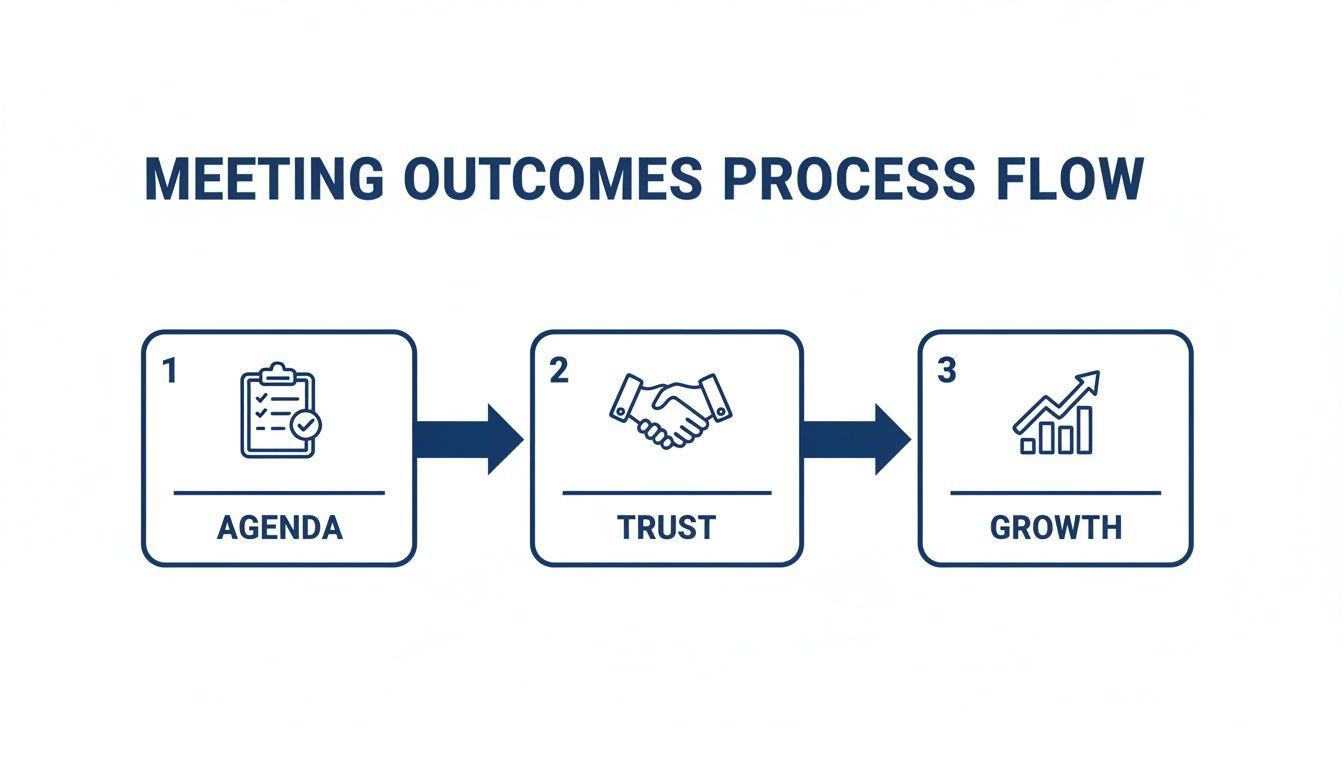
As you can see, a clear agenda is not about efficiency. A clear agenda drives everything else.
A Practical Agenda Structure
What does a balanced agenda look like in practice? It should carve out dedicated time for connection, for their topics, for your topics, and for locking in what happens next. This approach makes your conversations both productive and human, which helps when you juggle a packed schedule.
Here is a simple, effective structure you can start using right away:
- Connect & Settle In (5 minutes): Start with non-work chat. Ask about their weekend or a hobby. This rapport-building moment helps you both ease into the serious parts of the conversation.
- Their Topics (15-20 minutes): This is the heart of the meeting. The employee drives this part, talking through their recent wins, where they are stuck, or anything else on their mind.
- Your Topics (10-15 minutes): After they share, it is your turn. Here you can offer feedback, share important company context, or align on team priorities.
- Future Focus & Action Items (5 minutes): Always wrap up by summarizing the key takeaways and agreeing on clear next steps. Who is doing what, and by when? This creates accountability and ensures the conversation leads to real progress.
This kind of structure is essential for remote teams. The number of virtual one on ones increased by 1,230% in 2020. By 2022, 77% of all meetings had gone virtual, with 80% of us relying on video conferencing for these chats.
A well-planned agenda helps you cut through digital noise and make every minute count. Here's a sample flow for a typical 45-minute one on one.
Sample 45-Minute One On One Agenda Flow
This timed breakdown helps keep the conversation on track, making sure you cover all the essential bases without feeling rushed.
| Time Allotment | Agenda Section | Purpose |
|---|---|---|
| 5 minutes | Connect and Settle In | Build rapport and ease into the meeting with light, non-work-related conversation. |
| 20 minutes | Employee-Led Topics | The employee shares wins, challenges, and priorities. This is their dedicated space. |
| 15 minutes | Manager-Led Topics | You provide feedback, align on goals, and share relevant company or team updates. |
| 5 minutes | Future Focus & Action Items | Summarize takeaways, define clear next steps, and confirm ownership to ensure follow-through. |
Sticking to a flow like this brings a predictable, calming rhythm to your one on ones, making them something both of you can rely on.
Prompts to Guide the Conversation
A great structure is only half the equation. You also need the right questions to spark a real conversation. Ditching generic questions for more thoughtful prompts makes a difference.
A common mistake is letting the meeting drift into a rambling chat with no clear direction. The manager’s job is to set the frame, then let the employee paint the picture inside it.
Here are a few prompts to get you started for each part of your agenda:
For the Employee-Led Section
- "What was a real highlight for you last week, and what do you think made it a win?"
- "What is one thing that could be working better for you right now?"
- "Where are you feeling blocked or need more support from me?"
For the Manager-Led Section
- "I wanted to share specific feedback on how you handled that client issue. It was excellent."
- "Let’s talk through the timeline for the upcoming project so we are aligned on the next steps."
- "What is one thing I could do differently to better support you in hitting your goals?"
To improve your process and build a strong foundation, check out some proven meeting agenda templates. Adopting a tested format saves you time and brings consistency to your leadership style.
How to Adapt Your Agenda for Specific Goals
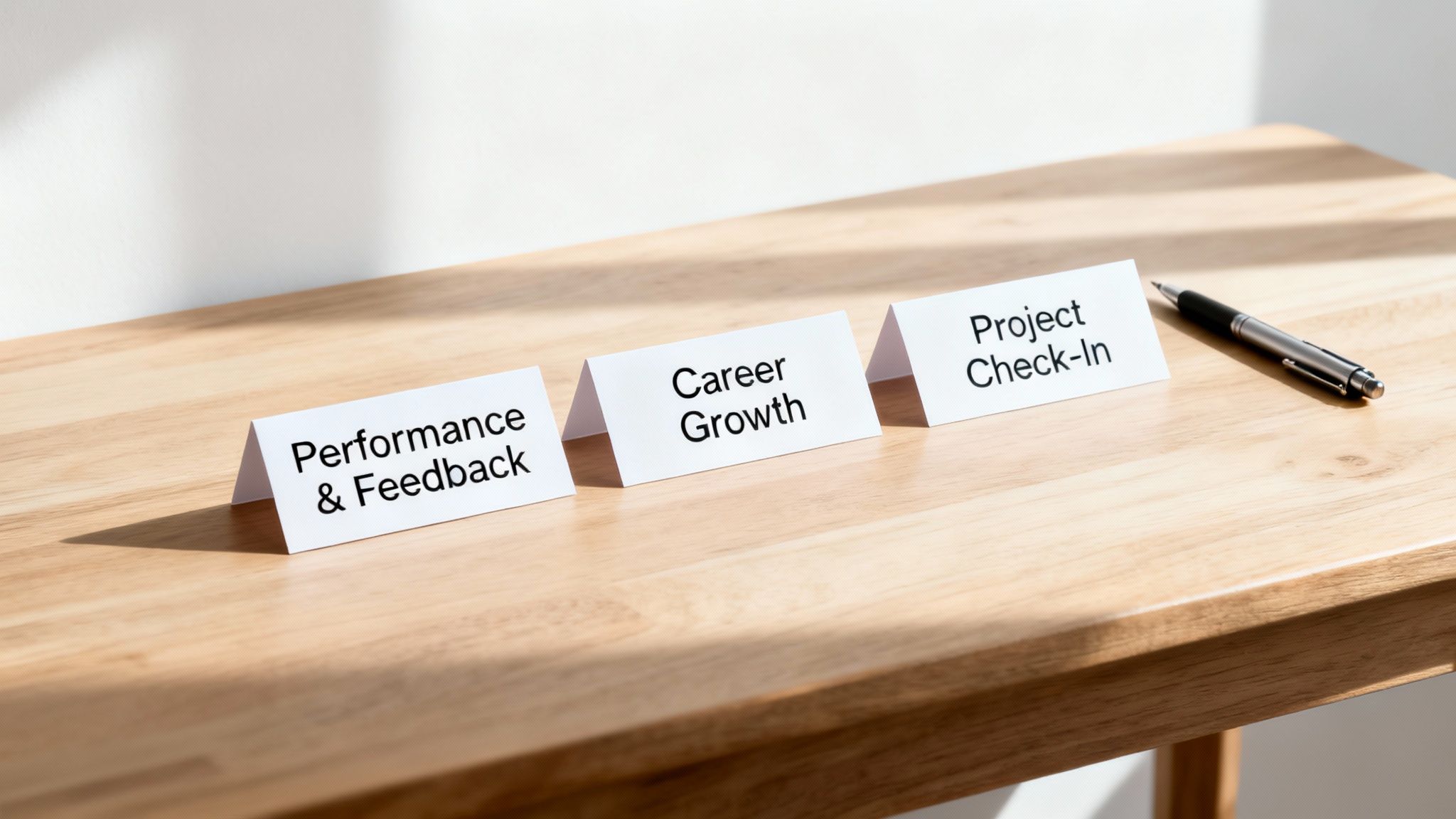
A one-size-fits-all agenda does not work. While having a consistent core structure is good for rhythm, the best managers know when to pivot. Adapting your one on one agenda to the specific goal of the conversation makes these meetings effective.
When you tailor the agenda, you send a clear message: "I am paying attention to what you need right now." This elevates the meeting from a routine check-in to a focused, problem-solving session. Let’s break down three common types of one on ones and how to steer them.
The Performance and Feedback Meeting
Here you get into the details of recent work. The goal here is twofold: reinforce what is going well and tackle areas for improvement with concrete, actionable examples. The conversation must be balanced, covering both strengths and development opportunities, so your employee walks away feeling supported, not critiqued.
Your agenda needs to build in space for a genuine dialogue, not a monologue from you. The best way to do this is by asking questions that get them to reflect on their own performance before you jump in with your observations. This makes the feedback feel more collaborative and less like a top-down directive.
Try framing the discussion with questions like these:
- "Looking back at the last project, what is one part you are proud of? Tell me why."
- "Where did you feel the most stuck? Let's walk through that together."
- "I have a few thoughts on the presentation you gave. Are you open to digging into some feedback?"
- "What is one skill you would like to sharpen before our next review?"
A performance conversation is not about grading past work. A performance conversation is about aligning on what success looks like going forward. Specific feedback tied to real examples works best. It is the clearest way to help someone grow.
The Career Growth Meeting
This is your chance to zoom out. We are not talking about daily tasks; we are talking about long-term professional ambitions. This is dedicated time to explore their skills, what interests them, and where they could go within the company. These conversations are one of your best tools for keeping great people. These conversations show you are invested in them as a person, not just an employee.
Unlike a performance review, this conversation is about aspiration. The agenda should be designed to get them talking about what gives them energy, the skills they want to build, and where they picture themselves in the next one to three years. Your role here shifts from manager to coach. You are helping connect their dreams to actual opportunities. To do this well, you need to set clear objectives. A great place to start is by getting familiar with how to set SMART goals for performance management.
Here are a few prompts to get a career growth conversation flowing:
- "If you could ignore your current job title, what kind of work would you do all day?"
- "What skills do you see other people using that you would love to learn?"
- "Are there any projects or teams here you are curious about?"
- "What is one concrete step we could take in the next six months to get you closer to that bigger goal?"
The Project Check-In Meeting
Now it is time to get tactical. This meeting is laser-focused on a specific project or initiative. The objective is simple: get a status update, identify and remove any roadblocks, and make sure everyone is aligned on the next steps. This one is much more direct and task-oriented than the other types of one on ones.
The agenda for a project check-in needs to be tight. The point is to keep the project on the rails, so your questions should be pointed and aimed at uncovering hidden problems or dependencies that could throw things off schedule. This is not the time for big-picture career chats.
Try these questions to run a productive project check-in:
- "What's the current status of your key tasks, and are we still looking good on the timeline?"
- "What is the single biggest risk you see to us hitting our next deadline?"
- "Are you waiting on anything from me or someone else that is holding you up?"
- "What decisions do we need to make in the next 48 hours to keep moving?"
Pre-Meeting Prep and Post-Meeting Follow-Up
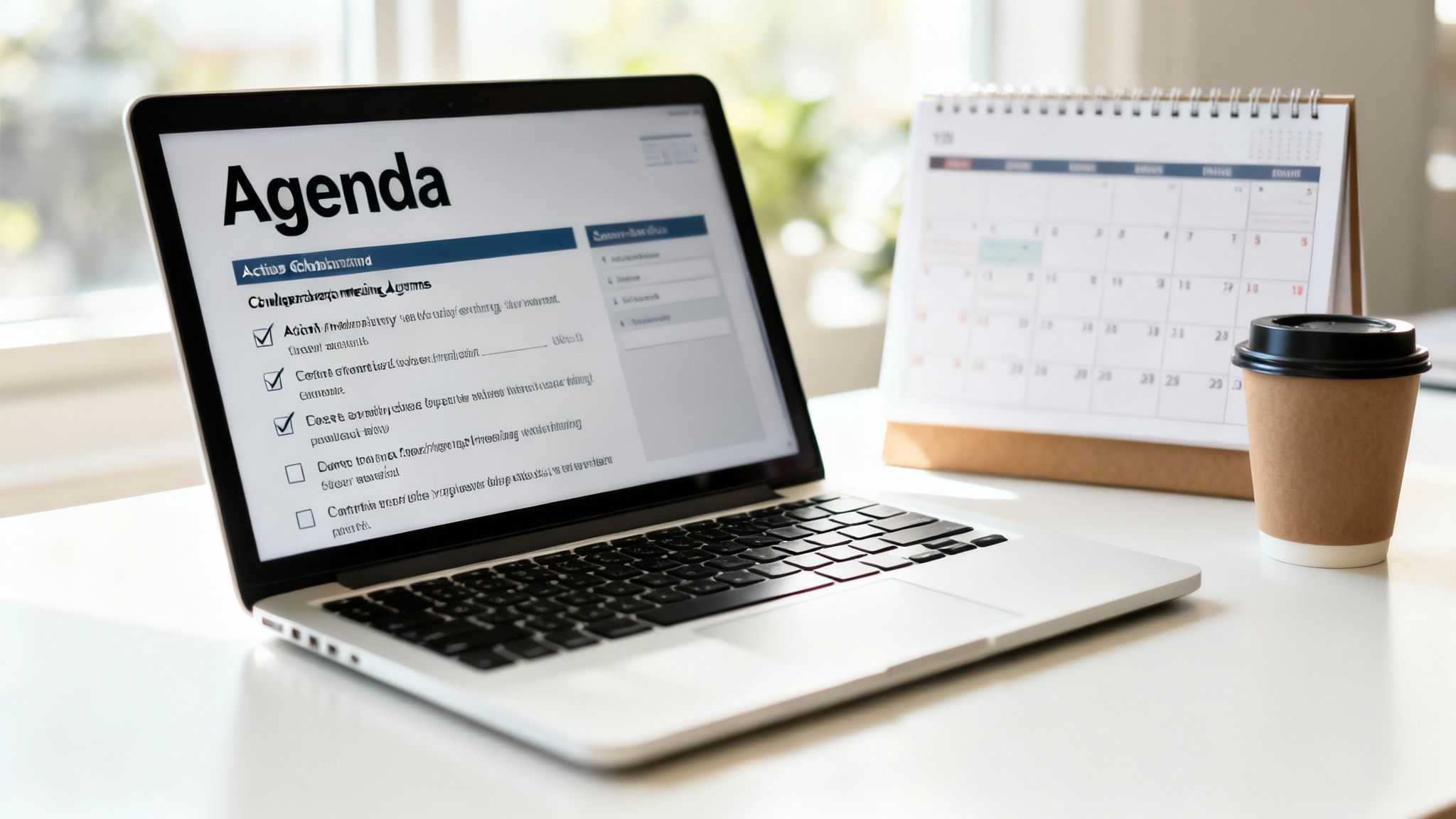
The success of a great one on one does not happen only during the meeting. Success is built on what you do before you sit down and cemented by what happens after you leave.
A solid prep and follow-up routine turns a simple chat into a system for growth and accountability. Without it, even a perfect agenda can fall flat, leading to conversations that go nowhere. This simple workflow creates a continuous loop, ensuring every meeting builds on the last and your team sees that these talks lead to real action.
Before the Meeting: A Simple Prep Workflow
Preparation should not take hours. A focused, 15-minute effort from both you and your employee is all it takes to set the stage for a great conversation. Showing up unprepared sends a terrible message. It shows the meeting, and the person, is not a priority.
Here is a quick and consistent pre-meeting checklist:
- Share the Agenda Early: Send the collaborative agenda 24 to 48 hours ahead of time. This is not a courtesy. It gives your direct report a chance to think and add their own items.
- Review Past Notes: Take five minutes. Scan your notes and action items from the last one on one. This helps you remember where you left off and follow up on promises.
- Add Your Topics: Jot down the two or three things you need to cover. Maybe it is feedback on a project or a quick company update. Knowing your priorities keeps the meeting from wandering.
This small investment of time ensures you both walk in ready for a real conversation, not a scramble to remember what you were supposed to talk about.
The goal of preparation is not to create a rigid script. The goal is to establish a clear starting point so you can have a focused, high-impact conversation that respects everyone's time.
After the Meeting: Closing the Loop
The conversation is only half the job. What happens next determines whether your discussion sparks progress or fades into memory. A quick, clear follow-up is essential for accountability.
Right after your one on one, block out ten minutes. Use this time to summarize the chat and outline what is next. This simple habit prevents miscommunication and makes clear who is responsible for what.
Your follow-up message should nail three things:
- Key Decisions: Briefly list any important decisions made.
- Action Items: Clearly spell out each task, who owns it, and when it is due. A simple "Action: [Name] will complete [Task] by [Date]" works perfectly.
- Appreciation: A quick "thanks for your time and honesty" goes a long way. This reinforces the value of the meeting.
Using a dedicated meeting action items template can give you a reliable structure and keep you from reinventing the wheel every time. If feedback was part of the discussion, delivering it well is crucial. You can sharpen that skill with our guide on how to provide constructive feedback.
This consistent follow-up process builds momentum from one meeting to the next and proves these conversations are driving real results.
Common Agenda Mistakes to Avoid
Even a solid agenda can get derailed by a few common missteps. These mistakes are rarely intentional, but they can make your one on ones feel like another meeting on the calendar or a waste of time. Knowing what these traps look like is the first step to sidestepping them and keeping the trust you have worked to build.
The biggest mistake managers make is letting the one on one become a simple status report. When the entire conversation is a rundown of task lists and deadlines, you have missed the point. That kind of update belongs in Slack, Asana, or a quick email.
Your one on one is for the important stuff that does not fit into a project update. Things like big ideas, nagging frustrations, and career questions. It is your employee’s meeting, not your project check-in.
This is the dedicated space for talking about career growth, knocking down roadblocks, and sharing real feedback. If you feel the conversation drifting into status-update territory, gently guide it back. A simple, "This progress looks great. Let's switch gears. How can I better support you this week?" is all it takes to protect the meeting's real purpose.
The Manager Monologue
Another classic blunder is the manager doing all the talking. If you find yourself talking for most of the meeting, you are doing it wrong. This is your employee's time to share what is on their mind. Your job is to listen, ask good questions, and coach.
A good rule of thumb is to aim for a 70/30 split. 70% of the talking should come from your direct report, and 30% from you. A practical way to achieve this is to let them run through their agenda items first, before you bring up your own. This simple shift ensures their priorities get the attention they deserve from the start.
Inconsistency and Cancellations
Constantly canceling or pushing your one on ones sends a loud, clear message: "You are not a priority." Even with the best intentions, frequent changes kill the psychological safety these meetings are meant to create.
Guard this time on your calendar like it is your most important appointment of the week. It is. If you absolutely have to reschedule, try to find another time within the same day or, at the latest, the same week. Always explain why the change is necessary and propose a new time immediately.
This level of commitment shows you respect your employee's time and value your relationship. Consistency builds a reliable space for honest conversation. Anyone can understand an occasional emergency, but a pattern of cancellations will undo all your hard work.
Common Questions About One-on-One Agendas
You will run into questions as you get your one on one agenda process dialed in. Let’s tackle some of the most common ones I hear from managers. The goal here is to solve those specific, nagging challenges so you can build a consistent, effective routine with your team.
How Far in Advance Should I Share the Agenda?
Get the collaborative agenda into your team member's hands 24 to 48 hours before the meeting.
This timing is deliberate. It gives them enough breathing room to reflect on their week, add their own topics, and come prepared for a real conversation.
Dropping the agenda on them an hour before the meeting is a recipe for a surface-level chat. It forces them to think on the spot instead of bringing thoughtful points to the table. This simple habit of sharing early is a signal you value their contribution and expect them to be an active participant, not a passenger.
What if My Employee Adds Nothing to the Agenda?
If an employee consistently shows up with nothing to add, your first move is to coach them gently.
Remind them this meeting is their time and their input is what makes it valuable. You can even offer a few prompts to get the ball rolling. Ask them to think about a recent win, a challenge they're stuck on, or something they learned last week.
If the pattern continues after a few nudges, make it a topic in the one on one itself. You can ask directly, "I've noticed you have not been adding items to our agenda lately. Is there anything I can do to make this a more useful space for you?" This opens the door to understanding what is going on. Are they disengaged, swamped, or unsure what's appropriate to discuss?
An empty agenda is a symptom, not the problem. An empty agenda is an opportunity for you to dig in, figure out what is happening with your employee, and learn how you can better support them.
How Do I Balance the Agenda with Spontaneous Topics?
Think of your agenda as a guide, not a rigid script. The agenda is there to make sure you cover the essentials and keep the conversation on track. The most important conversations are often the ones you did not see coming.
If an urgent, unplanned topic pops up, give it the space it deserves. Acknowledge the pivot out loud: "This sounds important. Let's dig into this now, and we can push other items to our next meeting if we need to." The point of an agenda is to be intentional, not to shut down organic conversations that matter.
What’s the Ideal Length for a One-on-One Meeting?
Most effective one on ones last between 30 and 60 minutes. The right length depends on how often you meet and what you are trying to accomplish.
- 30 Minutes: This is perfect for weekly check-ins that are more tactical, focusing on current progress and immediate roadblocks.
- 45-60 Minutes: A longer session gives you the space you need for deeper conversations about career growth, skill development, and wrestling with complex challenges.
The real key here is consistency. A reliable 45-minute meeting every other week is far more valuable than a 60-minute meeting that constantly gets rescheduled or cancelled. Choose a length you can stick to.
Ready to turn tough management conversations into confident, productive moments? PeakPerf is a lightweight toolbox that helps you prepare for feedback, performance reviews, and one-on-one meetings in minutes. Stop the Sunday night anxiety and start leading with clarity. Try it free today.


