A Proven Guide for Your One to One Meeting Agenda
A one to one meeting agenda is the roadmap for your conversation with a direct report. It elevates a casual chat into a focused discussion about employee development, well being, and feedback.
When you build this agenda together, you turn a routine check in into one of the most productive meetings of the week.
Why Your One to One Agenda Matters
One to ones have changed. The shift to remote and hybrid work means these conversations are the essential connective tissue of your team. This new reality puts a spotlight on your role as a manager.
Without a clear plan, these meetings wander into unproductive small talk and waste everyone's time. A well constructed one to one meeting agenda is your best defense. It provides the structure you need for a meaningful conversation that builds trust and drives performance.
The New Reality of Meeting Overload
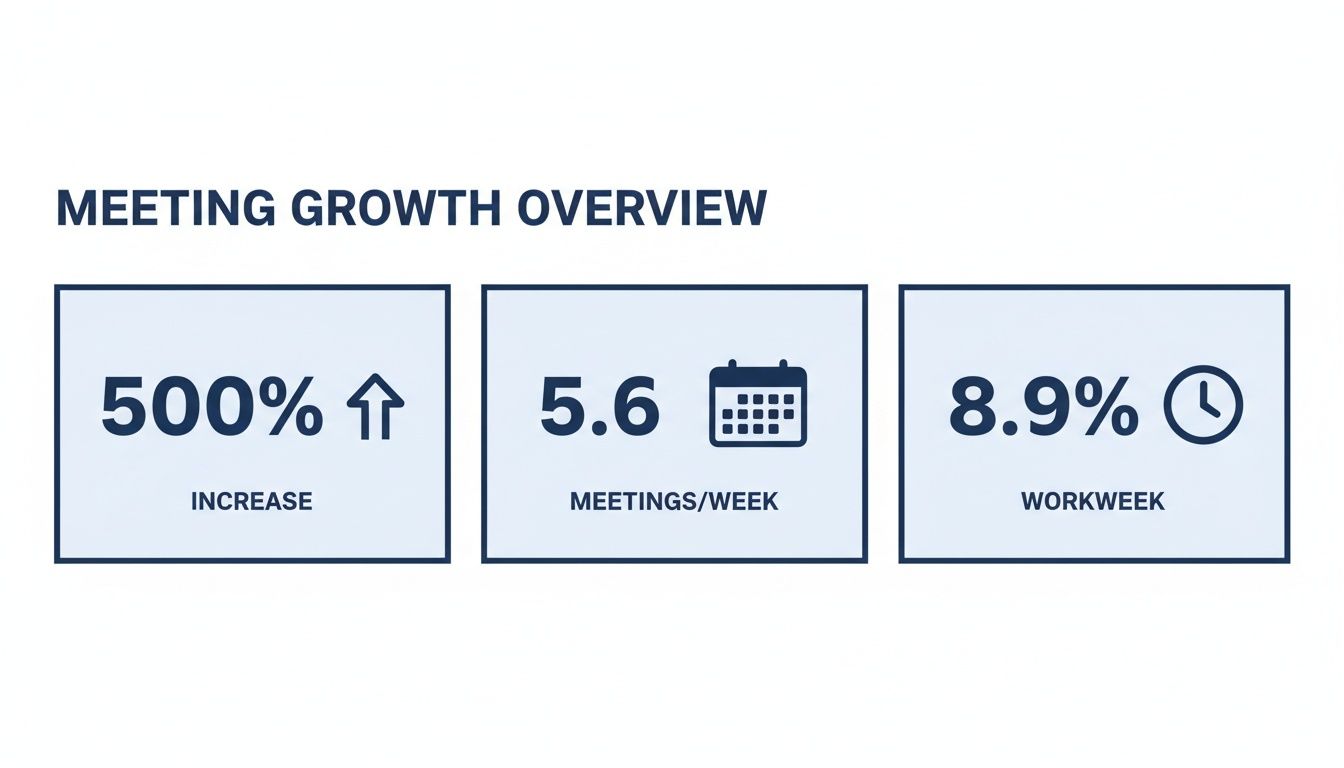
The data backs this up. A massive spike in one to one frequency makes a solid agenda non negotiable. Before 2020, the average professional had about 0.9 one on ones per week. Today, that number has increased by over 500% to 5.6 meetings weekly.
This surge now occupies nearly 9% of the average workweek. It makes up almost 80% of all new meetings scheduled since the pandemic. The takeaway is clear. We spend a lot more time in these conversations, and we need to make them count.
With so much time invested, it is critical that every minute is productive for both you and your employee.
Moving Beyond Simple Status Updates
A one to one should not be a verbal project update. You have project management tools, email, and Slack for that. These meetings are your single best opportunity to connect with your people on a human level.
A thoughtful agenda forces you to focus on topics that move the needle:
- Employee Well being: How is their workload? Are they feeling stressed? What is their work life balance like?
- Career Development: What are their long term goals? What skills do they want to build next? How you help them get there?
- Removing Roadblocks: What is getting in their way? Uncovering hidden challenges is your job as a manager.
- Building Trust: This is your chance to create a safe space where honest, two way feedback happens.
When you intentionally make time for these bigger conversations, you transform the one to one from a reporting session into a coaching tool. It becomes a dedicated space for mentorship and support. These are two of the biggest drivers for improving employee engagement.
How to Build a Meeting Agenda That Works
Forget agendas as a simple to do list. A great one to one agenda is a living, shared document that gives both you and your direct report a voice. When you build the agenda together, you change the dynamic of the meeting. It stops being about your priorities. It becomes a real conversation about mutual goals and their growth.
Sharing this document ahead of time is non negotiable. This gives your team member space to think, gather their thoughts, and add their own items. This one small step turns the meeting into a genuine partnership. It is a clear signal that you value what they say, which is foundational for building trust and getting honest dialogue.
The Core Parts of a Successful Agenda
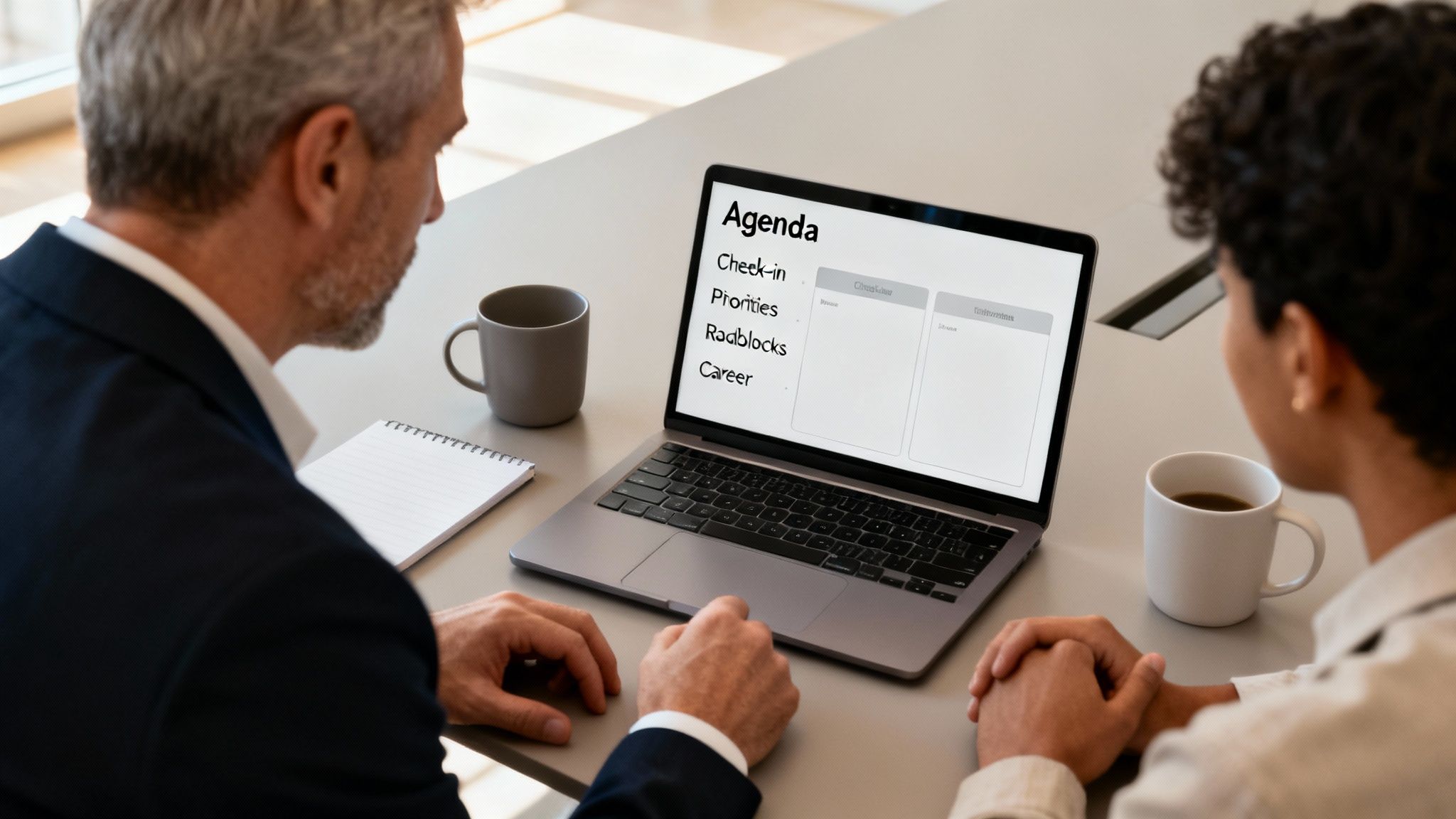
An effective agenda does more than cover tactical stuff. It connects today's work with tomorrow's career goals. To keep important conversations from slipping through the cracks, your agenda should consistently touch on a few key areas. For a more detailed breakdown, you can review these seven steps for effective agendas.
Think of your agenda as having four main building blocks:
- The Human Check in: Kick things off with a simple, human connection. Ask how they are doing personally, not just professionally. This helps you understand their overall well being.
- Priorities & Roadblocks: This is where you dig into current projects. The goal is not a status update. It is to find out what is blocking their progress and how you clear the path.
- Long Term Goals: Make dedicated time to talk about their bigger career ambitions or development goals. If you do not put it on the agenda, these crucial conversations get pushed aside.
- Feedback & Growth: Create a specific slot for two way feedback. This is their chance to tell you what they need. It is also the perfect time to discuss their career path and find new opportunities.
A well structured one to one agenda helps close the massive gap between a manager’s intent and an employee's experience. It is what makes the conversation meaningful for both of you.
There is a huge 'leadership blind spot' with one on ones. One survey found a shocking disconnect. 94% of managers believe they hold these meetings, but only 10% of employees feel they happen effectively. Fewer than half of workers get a monthly one on one. Only 20% of those feel the time is well spent. A structured agenda is one of the best tools you have to close that gap. You find more on this leadership blind spot from the Association for Talent Development.
A Quick Checklist for Your Next Agenda
Before you send that next meeting invite, run through this quick checklist. It is a simple way to ensure your plan is balanced, collaborative, and moves things forward. A good one on one should not feel like an interrogation. It should feel like a productive, supportive conversation.
- Is it a shared document? Has your employee been given access and actively encouraged to add their own topics?
- Does it look beyond this week? Have you made time for an item dedicated to long term career growth or skill development?
- Is there time for feedback (for you)? Have you explicitly blocked out time for your employee to give you feedback, not just the other way around?
- Are last week's action items on it? Start by reviewing progress on previous commitments. This builds momentum and accountability.
Agenda Templates for Different Meeting Cadences
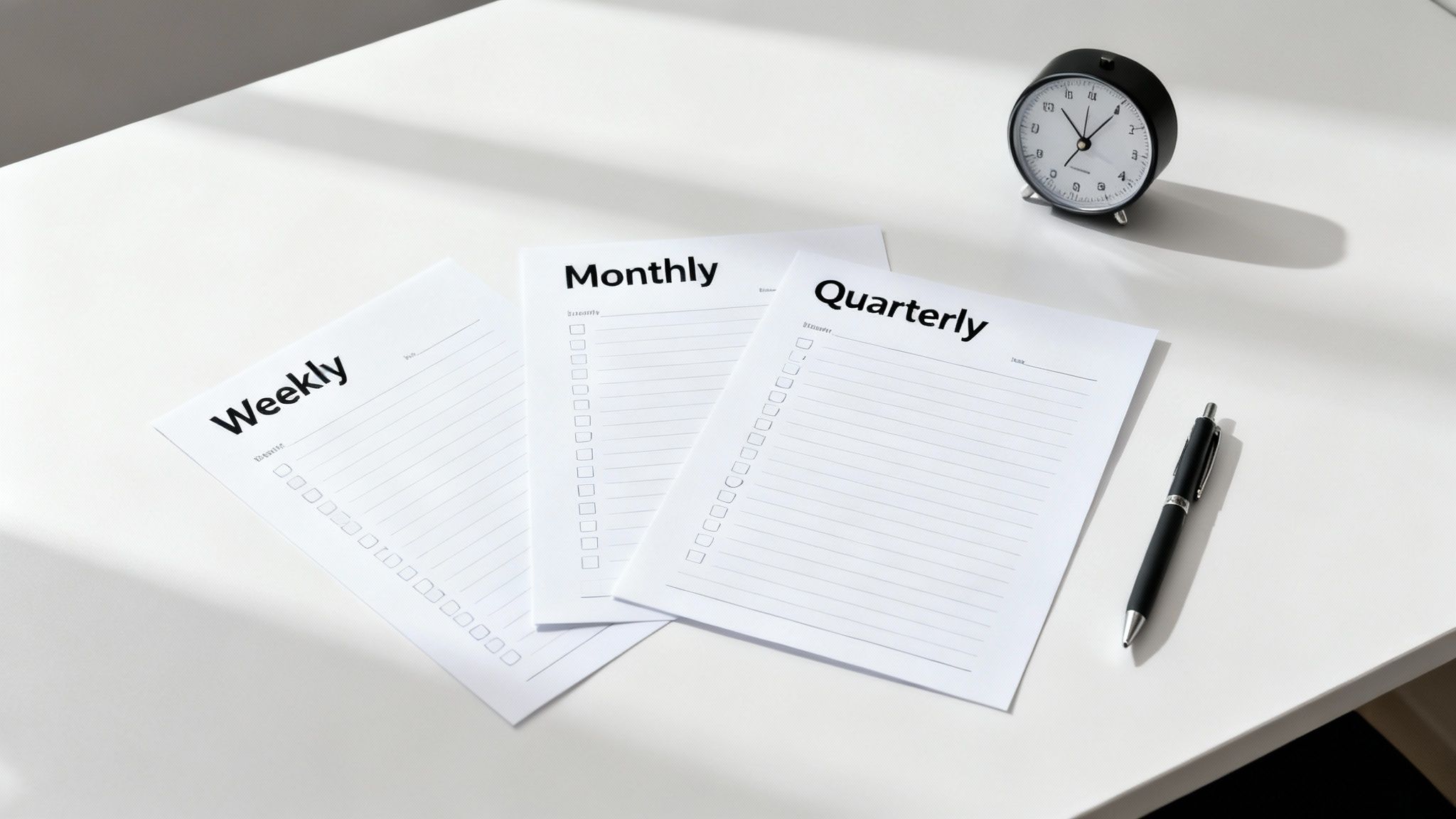
Not all one to one meetings are the same. A quick weekly check in serves a different purpose than a deep dive quarterly career conversation. If you are using a one size fits all agenda, you are missing huge opportunities for focused, meaningful discussions.
The key is matching your one to one meeting agenda to the meeting’s frequency and its core objective. This simple shift ensures you are tackling immediate needs without losing sight of the big picture of long term growth. Tactical fires belong in weekly syncs. Strategic planning is for your monthly and quarterly sessions. When you tailor your agenda, you respect everyone’s time and make every conversation count.
To make this practical, let's break down how the structure and focus of your one to ones should change based on how often you meet.
The Weekly Tactical Check In
Think of the weekly one to one as your team's pulse check. It is fast, focused, and centered on the immediate work week. The goal here is simple: clear roadblocks and ensure priorities are aligned. This is not the time to solve big picture career questions. Keep it tight and maintain momentum.
Here’s a simple, timed template for a 30 minute weekly meeting:
- Personal Check in (5 minutes): Kick things off with a real, human connection. Ask how their weekend was, what they are excited about, or just how they are feeling. This is not small talk. It builds trust and gives you crucial context on their state of mind.
- Priorities & Roadblocks (15 minutes): This is the heart of the meeting. The employee should drive this part. They should share their top 1 to 3 priorities for the week and highlight anything standing in their way. Your job is to listen intently and help clear those obstacles.
- Feedback & Questions (5 minutes): Make a dedicated space for quick feedback or questions. This could be about a recent project, a clunky process, or anything else on their mind.
- Recap Action Items (5 minutes): Always end by quickly summarizing the next steps. Clearly define who owns each action item. This ensures accountability and makes sure the conversation translates into progress before you meet again.
The Monthly Strategic Review
Monthly meetings are your chance to zoom out from the week to week grind. Here, you connect the daily tasks to the broader team and company goals. You will review progress against bigger objectives and make any necessary adjustments for the month ahead.
Try this 45 minute agenda for a more strategic conversation:
- Wins & Challenges (10 minutes): Start on a high note by celebrating successes from the past month. Then, pivot to discussing any significant challenges they faced. This gives you a balanced, honest look at their recent performance.
- Goal Progress Review (15 minutes): Dig into their progress against their monthly or quarterly goals. Are they on track? Do priorities need to shift? This is where you course correct.
- Upcoming Priorities (10 minutes): Now, look ahead. Discuss the main objectives for the next month and ensure there is a crystal clear plan for what needs to get done.
- Feedback & Support (10 minutes): Ask the most important question a manager asks: "How I better support you?" This is also the perfect time to give more detailed feedback on their work and how it aligns with team expectations.
Your agenda's cadence dictates its focus. Weekly agendas solve immediate problems. Monthly agendas align strategy. Quarterly agendas build careers. Mixing these up leads to unfocused and unproductive meetings.
The Quarterly Development Conversation
This one is different. The quarterly meeting is 100% dedicated to the employee’s professional growth and career path. All talk of projects, deadlines, and tactical work should be off the table. This session is a pure investment in their future, which is one of the highest leverage things you do for your organization.
A 60 minute development agenda should look something like this:
- Career Aspirations (15 minutes): Open the conversation by exploring their long term career goals. Ask where they see themselves in the next year or two. What kind of work energizes them?
- Skills & Strengths (20 minutes): Talk about the skills they want to build and identify their core strengths. Then, brainstorm opportunities like new projects, mentorship, or training that align with those goals.
- Feedback on Growth (15 minutes): Provide feedback specifically related to their development. Focus on the behaviors and skills that will help them get to that next level, not on their recent performance.
- Create a Development Plan (10 minutes): Do not leave without a plan. Work together to set one or two actionable development goals for the upcoming quarter. Define what success looks like and schedule a specific time to check in on it.
One to One Meeting Agenda Templates by Cadence
To help you visualize how these agendas work together, here's a quick comparison of the three different cadences. Notice how the time allocation and focus shift from tactical to strategic to developmental.
| Agenda Item | Weekly Tactical (30 Mins) | Monthly Strategic (45 Mins) | Quarterly Development (60 Mins) |
|---|---|---|---|
| Check-in | Personal Check-in (5 mins) | Wins & Challenges (10 mins) | Career Aspirations (15 mins) |
| Review | Priorities & Roadblocks (15 mins) | Goal Progress Review (15 mins) | Skills & Strengths (20 mins) |
| Look Ahead | Recap Action Items (5 mins) | Upcoming Priorities (10 mins) | Create a Development Plan (10 mins) |
| Feedback | Feedback & Questions (5 mins) | Feedback & Support (10 mins) | Feedback on Growth (15 mins) |
Using these distinct templates ensures every conversation has a clear purpose. You are not just "checking in". You are actively managing performance, aligning strategy, and investing in your people's futures.
Asking the Right Questions to Guide the Conversation
An agenda gives your one on one a skeleton, but the questions you ask bring it to life. A great one to one meeting agenda is less about a checklist of topics and more about the conversation quality. If you want to move beyond robotic status updates, you need to master asking open ended questions that invite reflection and honesty.
Think of it this way: your questions shift the entire dynamic. Instead of you talking at your employee, you create a space where you listen more than you speak. This empowers them to drive the conversation and share what is on their mind, not what they think you want to hear.
Do not underestimate the importance of these chats. When Adobe swapped annual reviews for regular check ins, they saw voluntary turnover drop by a massive 30%. Managers account for 70% of the variance in team engagement. It is no surprise that employees who get consistent one on one time are 67% less likely to be disengaged. The data is clear: these meetings matter.
Questions to Uncover Roadblocks
One of your most important jobs as a manager is to be a roadblock remover. You cannot clear a path if you do not know what is in the way. Asking a generic "Is anything blocking you?" usually gets a quick "nope," even when it is not true. You have to dig a little deeper.
Try these prompts instead:
- What is taking up most of your mental energy this week?
- If you changed one process to make your job easier, what would it be?
- Are you waiting on anyone for a decision or information to move forward?
These kinds of questions are designed to uncover the little friction points that your direct report might not think to bring up. When you help them solve these specific issues, you build trust and make the whole team more effective.
Questions to Discuss Career Goals
Career development should not be a once a year topic saved for the performance review. Weaving it into your regular one on ones shows your people you are invested in their future, not their current output. These conversations help you understand their long term ambitions and figure out how you help them grow right where they are.
Here are a few ways to get that conversation started:
- What part of your work is giving you the most energy right now?
- What new skill are you most excited to learn this year?
- Looking ahead a year from now, what is one big thing you would like to have accomplished?
- Are there any upcoming projects you would love to get involved in?
Your employee's growth is your team's growth. When you ask about their career aspirations, you are not just helping them. You are also identifying future leaders and discovering where to invest your team's development resources for the greatest impact.
Questions to Request Honest Feedback
This might be the most important thing you do as a manager: ask for feedback on your own performance. It takes humility, but it is the fastest way to build a healthy, trusting relationship. You need to create a space where your direct reports feel safe enough to give you honest upward feedback.
A vague "Got any feedback for me?" will not work. Be specific to get more than a polite "Everything's fine."
- What is one thing I start doing differently to better support you?
- When was the last time my feedback was unclear?
- What's one thing you would like to see more of in our team meetings?
These prompts invite constructive, actionable criticism. For more ideas to keep your conversations fresh, look at our complete list of powerful one on one questions.
Managing Difficult Conversations and Remote Meetings
Your one to one agenda is more than a list of talking points. It becomes your most reliable tool when you face two of the trickiest parts of management: giving tough feedback and connecting with your remote team. A well thought out agenda gives you the structure you need to navigate these moments with confidence and care.
Without a plan, tough conversations veer off track, becoming emotional or unclear. A structured agenda keeps you anchored to objective facts and focused on a productive outcome. It turns a tense meeting into a constructive coaching session.

Structuring Tough Feedback on Your Agenda
When you have to tackle a performance or behavior issue, your agenda should steer the conversation toward a clear, fact based discussion. A fantastic framework for this is the Situation Behavior Impact (SBI) model. It is designed to keep feedback objective and actionable, so the conversation does not feel like a personal attack.
Here is how you weave it right into your agenda items:
- Situation: First, you set the scene by describing the specific context. An agenda item might look like this: "Discuss presentation during the Q3 client kickoff."
- Behavior: Next, you detail the observable action, stripping out any judgment. In your private notes for that item, you might write, "The data slides were presented without sourcing, which caused confusion."
- Impact: Finally, you explain the concrete result of that behavior. For instance, "The client team questioned our data's credibility, which required follow up emails to correct."
This approach anchors your feedback in concrete examples. It shifts the focus from blame to problem solving, which is crucial for maintaining trust. You can learn how to handle difficult employees with specific strategies.
Making Remote One to Ones More Effective
Remote meetings require more deliberate effort to build a real connection. Your one to one agenda is the perfect place to create that personal touch, even when you are miles apart. If your team is spread across different countries, using a good timezone meeting scheduler is a simple, practical way to eliminate scheduling headaches right from the start.
Make sure you kick off every remote agenda with a dedicated personal check in. This is not just a nice to have. It is your best chance to gauge morale and build rapport when you cannot rely on office body language.
Another great tip is to make the agenda a shared, living document. During the meeting, have both of you type notes into it in real time. This little trick keeps both people actively participating instead of passively listening on a video call. It also solidifies alignment on action items and creates a clear, shared record of your conversation.
A Few Common Questions About Agendas
Even with the best game plan, rolling out a structured one to one meeting agenda raises a few practical questions. For a lot of teams, the idea of a shared agenda is a new habit, so hitting a couple of snags is normal. Let's tackle some of the most common ones head on so you and your team get into a good rhythm quickly.
The whole point is to make the agenda a tool that serves both of you, not some rigid checklist you have to slog through. Getting clear on these points helps everyone understand the "why" behind it and feel comfortable jumping in.
How Far in Advance Should I Send the Agenda?
You should send the agenda at least 24 hours before your meeting. That gives your direct report enough time to read it, gather their thoughts, and add their own talking points. If you send it two business days ahead, even better. That sets the stage for a thoughtful conversation.
The real purpose of sharing the agenda beforehand is to shift the meeting from a manager's monologue to a genuine dialogue. This one simple step signals that you see the meeting as a partnership, which is a huge driver for engagement and honest feedback.
Shooting it over at the last minute turns it into your personal to do list. When you share it early, you are inviting true collaboration. It ensures your employee shows up ready to talk about what is on their mind, not what is on yours.
What if My Employee Does Not Add Anything to the Agenda?
If someone is not adding their own items, bring it up directly in your next one to one. It is often not a sign of disinterest, but a broken habit from past jobs. Gently explain again why their input is so crucial. You frame it as their dedicated time to get the support, clarity, or resources they need to succeed.
Try asking a direct, open ended question to get the ball rolling. Something like, "What's one thing you want to make sure we cover today?" works well. Or, "My goal is for this meeting to be as helpful for you as possible. What would you like to add to our agenda this week?"
Some people have been trained by previous managers to sit back and listen. It takes a little time to unlearn that. Consistently asking for their topics and then genuinely engaging with them will show them you mean it and help build that new muscle.
How Do I Keep the Meeting from Turning into a Status Update?
The key here is discipline, both in how you structure the agenda and how you run the meeting.
Get all the routine project updates handled before the meeting. Use your project management tool, a quick email, or a Slack channel for that stuff. This protects your valuable face to face time for conversations that require a conversation.
Make sure your agenda has dedicated items for deeper topics like "Career Growth," "Roadblocks," or "Team Dynamics." Use the time limits on your agenda to keep things moving. If you feel the conversation drifting into a play by play of tasks, gently steer it back. You say something like, "Thanks for that update. To make sure we have enough time, let's jump to our next item on your professional development."
Great leaders make tough conversations look easy. With PeakPerf, you can prepare for your most important leadership moments in minutes. Build structured agendas, create clear feedback, and set meaningful development plans using proven frameworks. Start turning anxiety into confident delivery. Get started for free at PeakPerf.


